
Spencer Nikosey of Killspencer on Making Things Real: Lessons in Craft, Design, and Turning Ideas into Objects
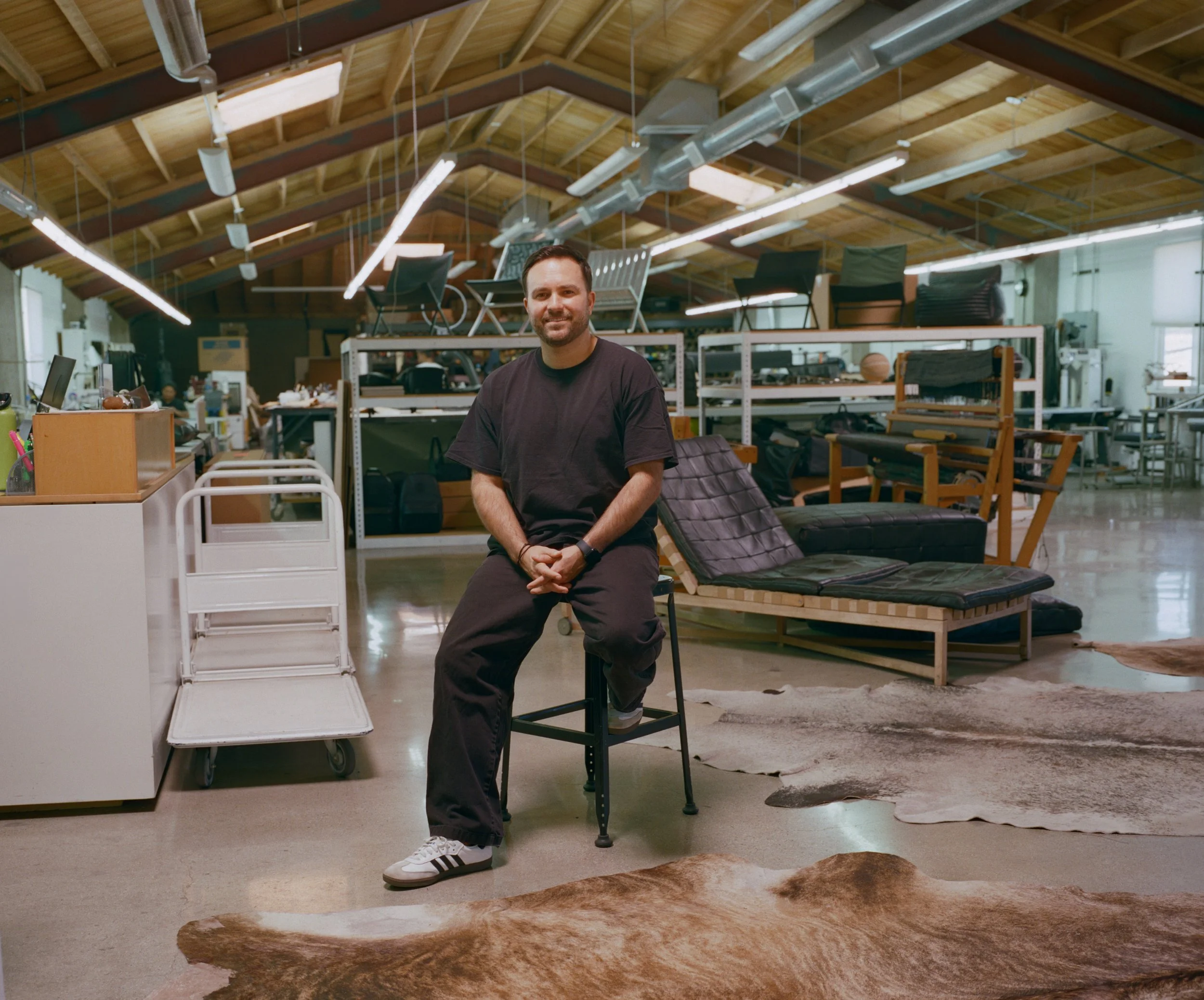
Spencer Nikosey at the Killspencer Atwater HQ in Los Angeles
Spencer Nikosey is one of those people whose enthusiasm for creating is genuinely contagious. What I've always admired about him is not just what he creates, but the energy he brings to the people around him. He has a way of making ideas feel possible. Whether he's talking about design, music, sport, or a new project he's exploring, his excitement is infectious and often leaves you wanting to pursue your own work with greater focus and ambition.
A designer, maker, inventor, musician, and lifelong student of craft, Spencer approaches the world with endless curiosity, constantly asking how things work, how they can be improved, and what might happen if he made them himself. That mindset eventually became Killspencer, the Los Angeles–based brand known for its handcrafted leather goods and accessories, and extends into other creative and collaborative projects, including LIVEBALL INC (LVBL), a tennis-focused initiative centered around high-energy, competitive "live ball" play.
Over the years, he has surrounded himself with talented creatives, musicians, athletes, makers, and thinkers while also building spaces that naturally bring those worlds together. I've spent time in both his former Echo Park studio and the Killspencer Atwater HQ for drawing sessions, music sessions, and long conversations, and each visit feels less like entering a workshop and more like stepping into an ecosystem of ideas in motion. One thing that struck me immediately was the relationship he has with the people he works alongside. Throughout our conversation, Spencer continually brought attention back to his team, making sure their contributions were recognized. You get the sense that he doesn't see them simply as employees, but as collaborators and an essential part of what Killspencer has become. That respect, trust, and shared commitment to craft feels deeply embedded in the culture he has built.
I'm grateful that Spencer opened the doors to his studio and shared his process with such honesty and detail. My hope is that this conversation sparks something in you and encourages you to take that idea, sketch, invention, or dream you've been carrying around and move it one step closer to reality.
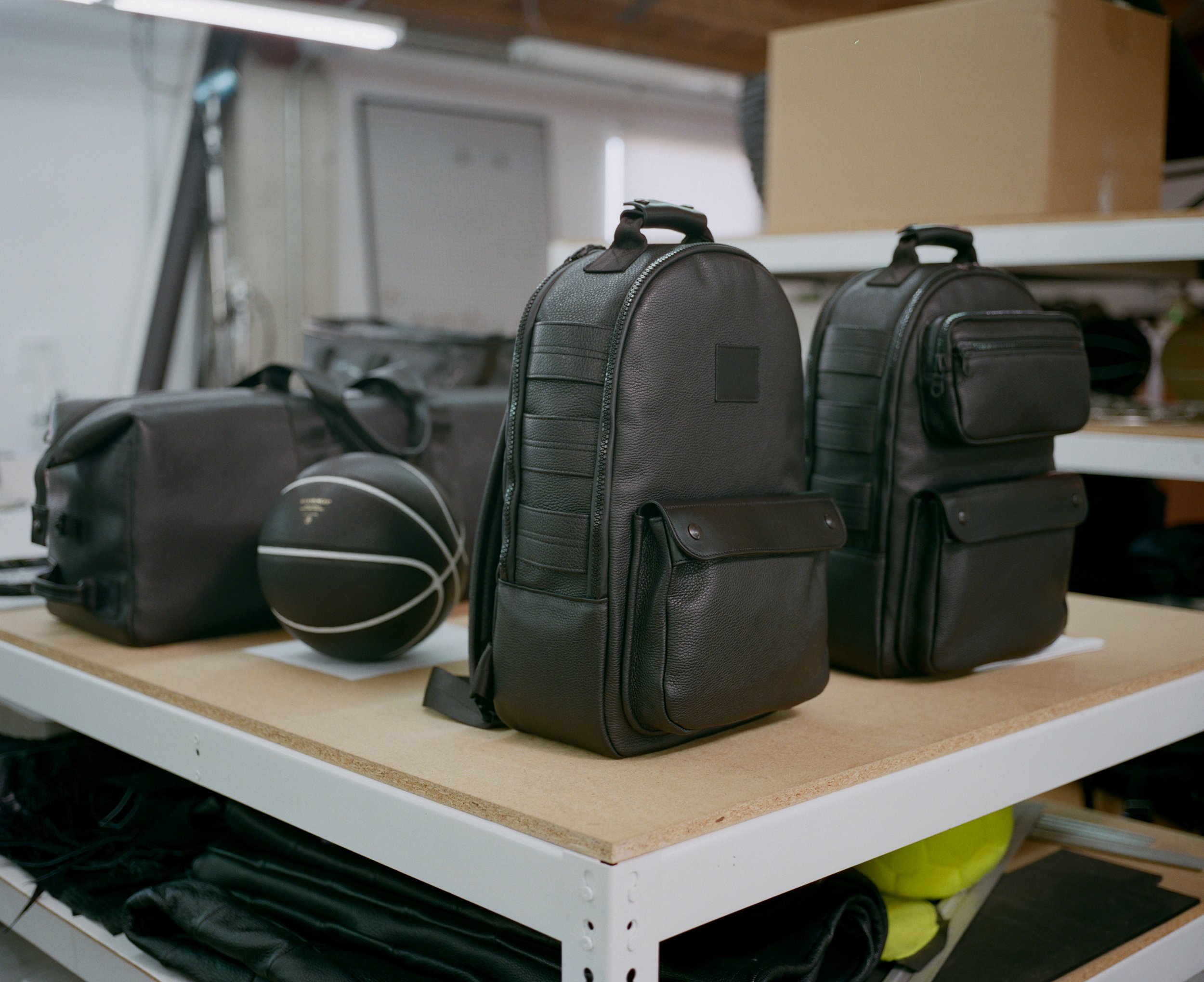
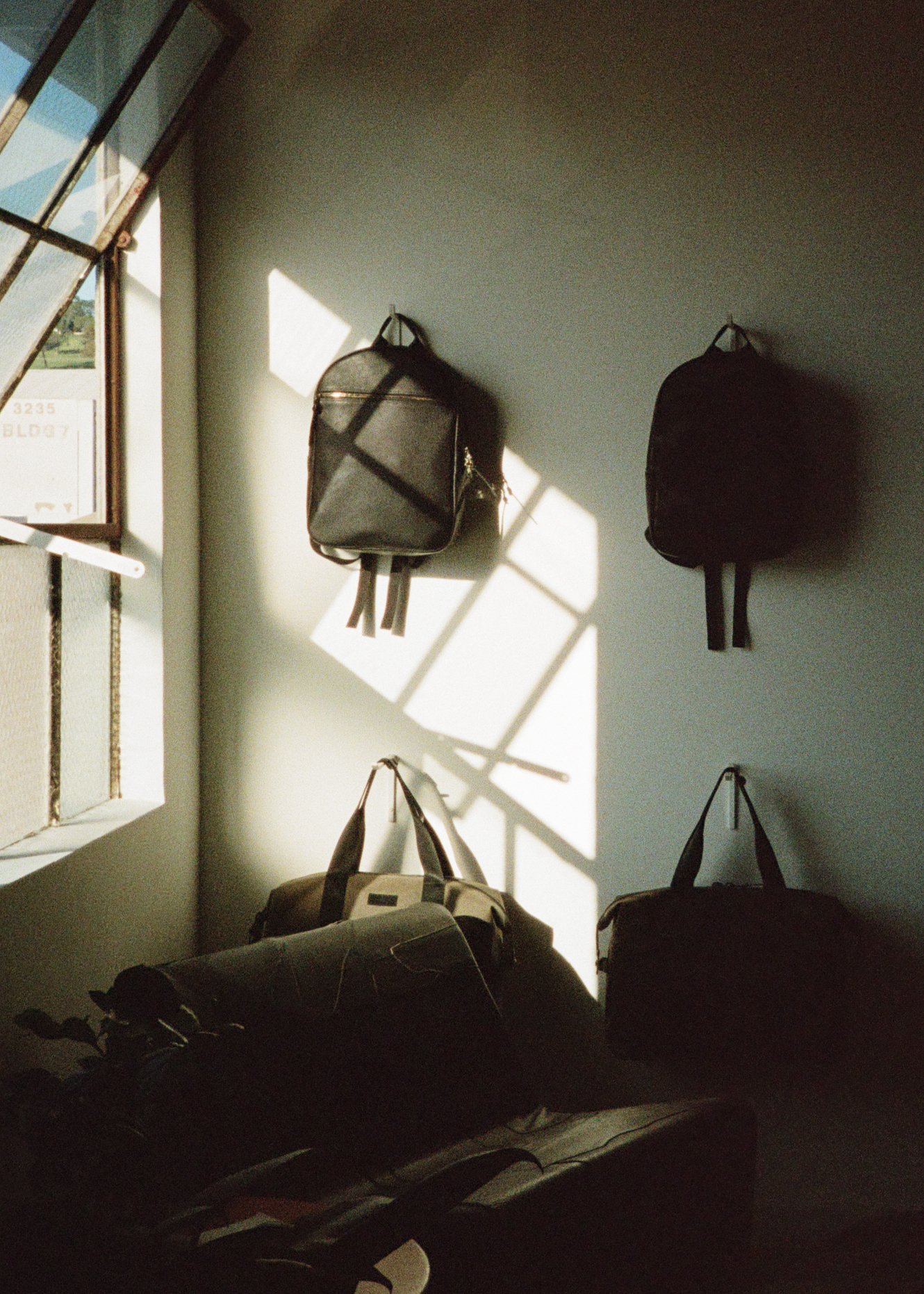
A selection of Killspencer prototypes and finished pieces in the brand's Los Angeles HQ
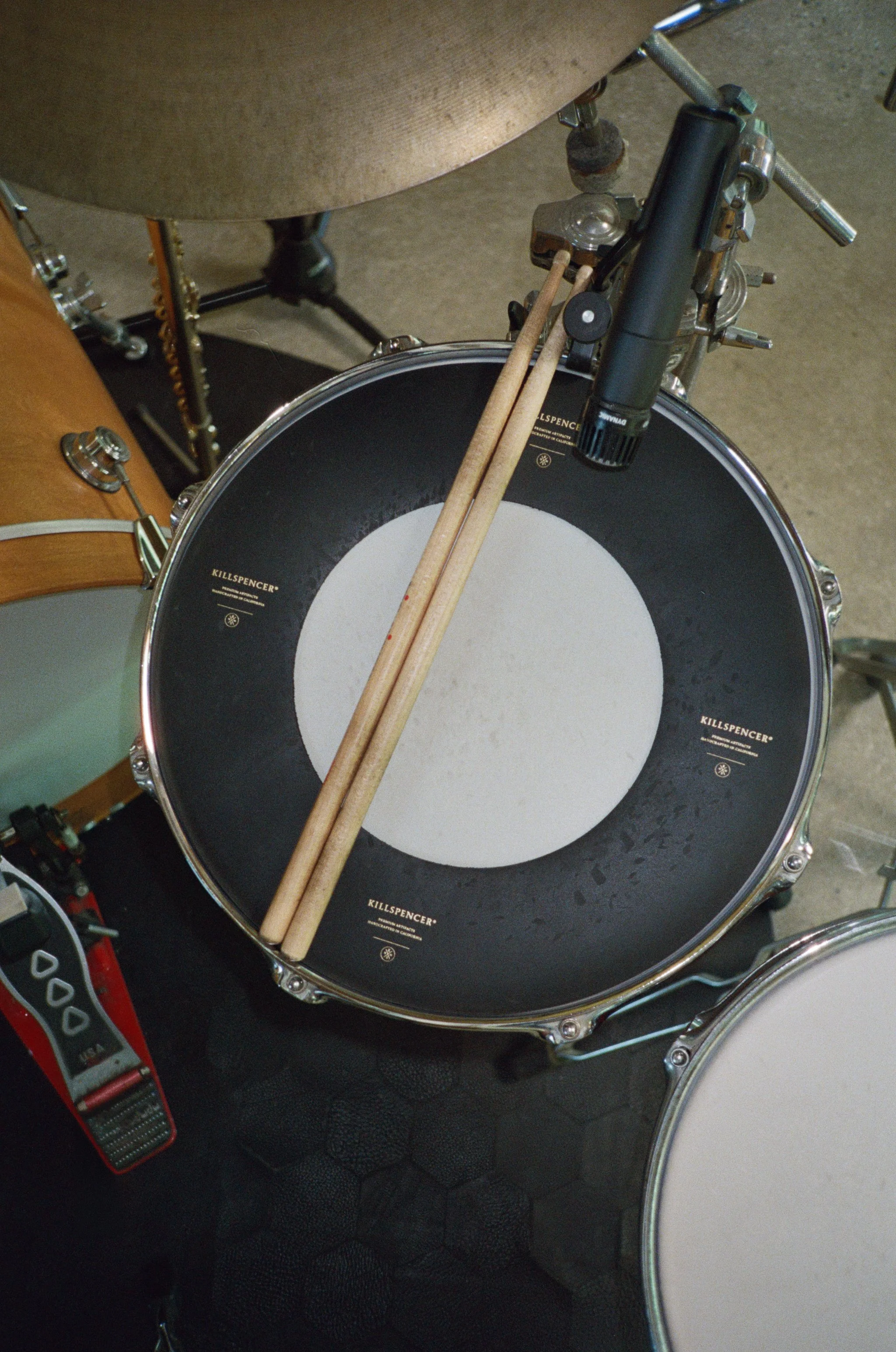
A custom Killspencer drum dampening system in the Killspencer Atwater HQ.
Growing up, were you always making things? What captured your curiosity as a child, and what did you imagine yourself becoming when you grew up?
When I was a kid, I was always encouraged to draw. Both of my parents are designers, and they were constantly giving me art supplies—pencils, paper, glue, scissors. I was always drawing and painting and making things.
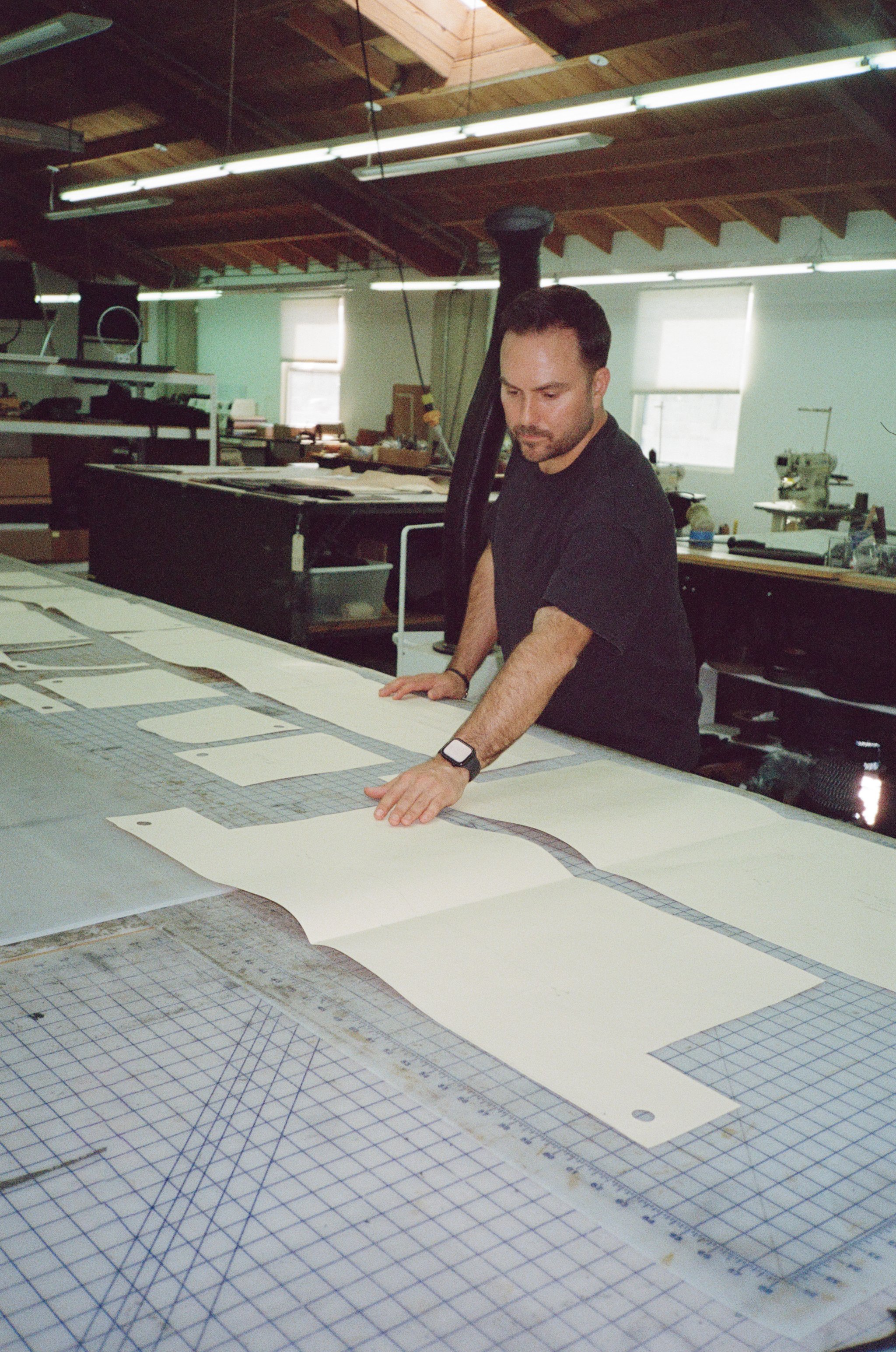
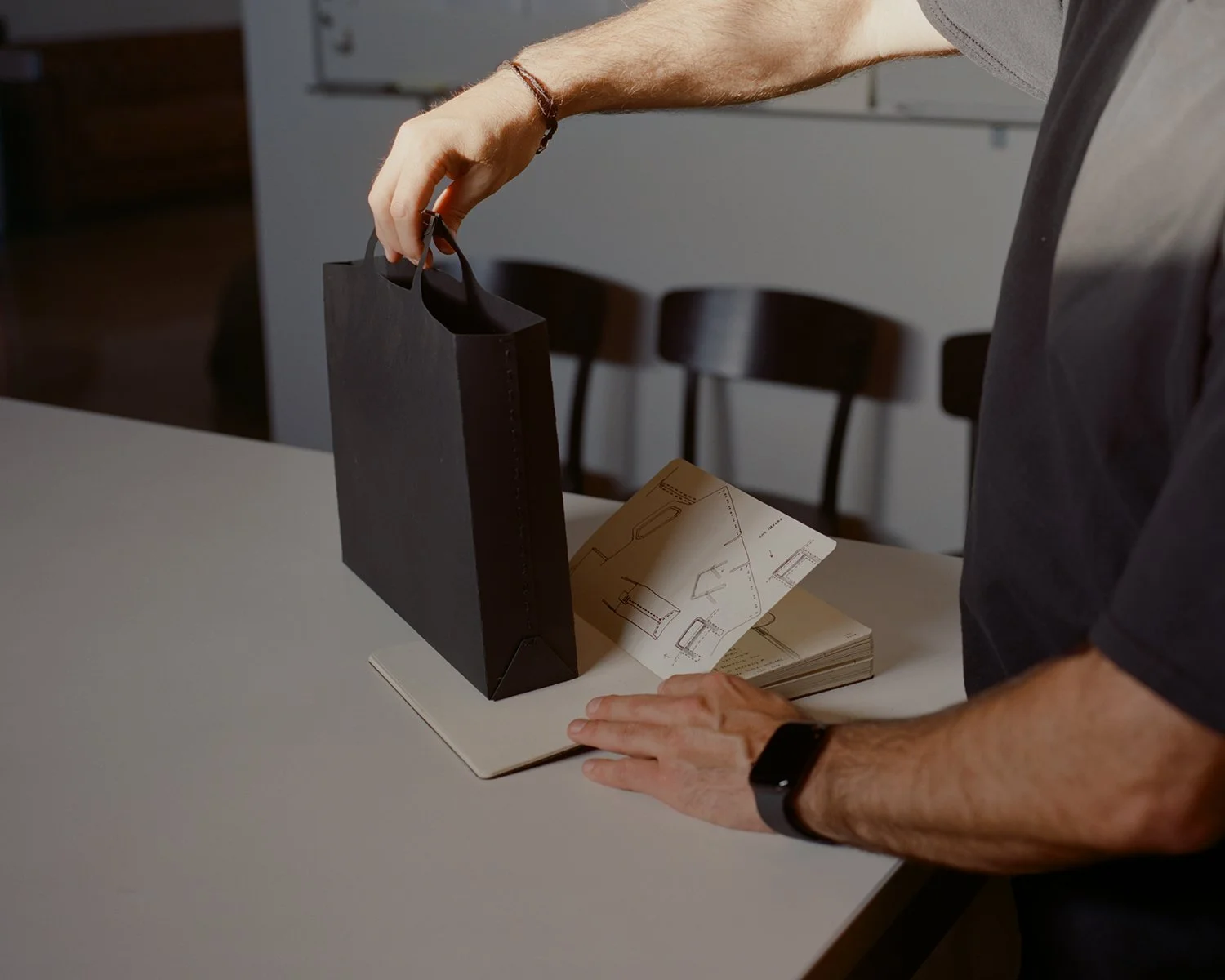
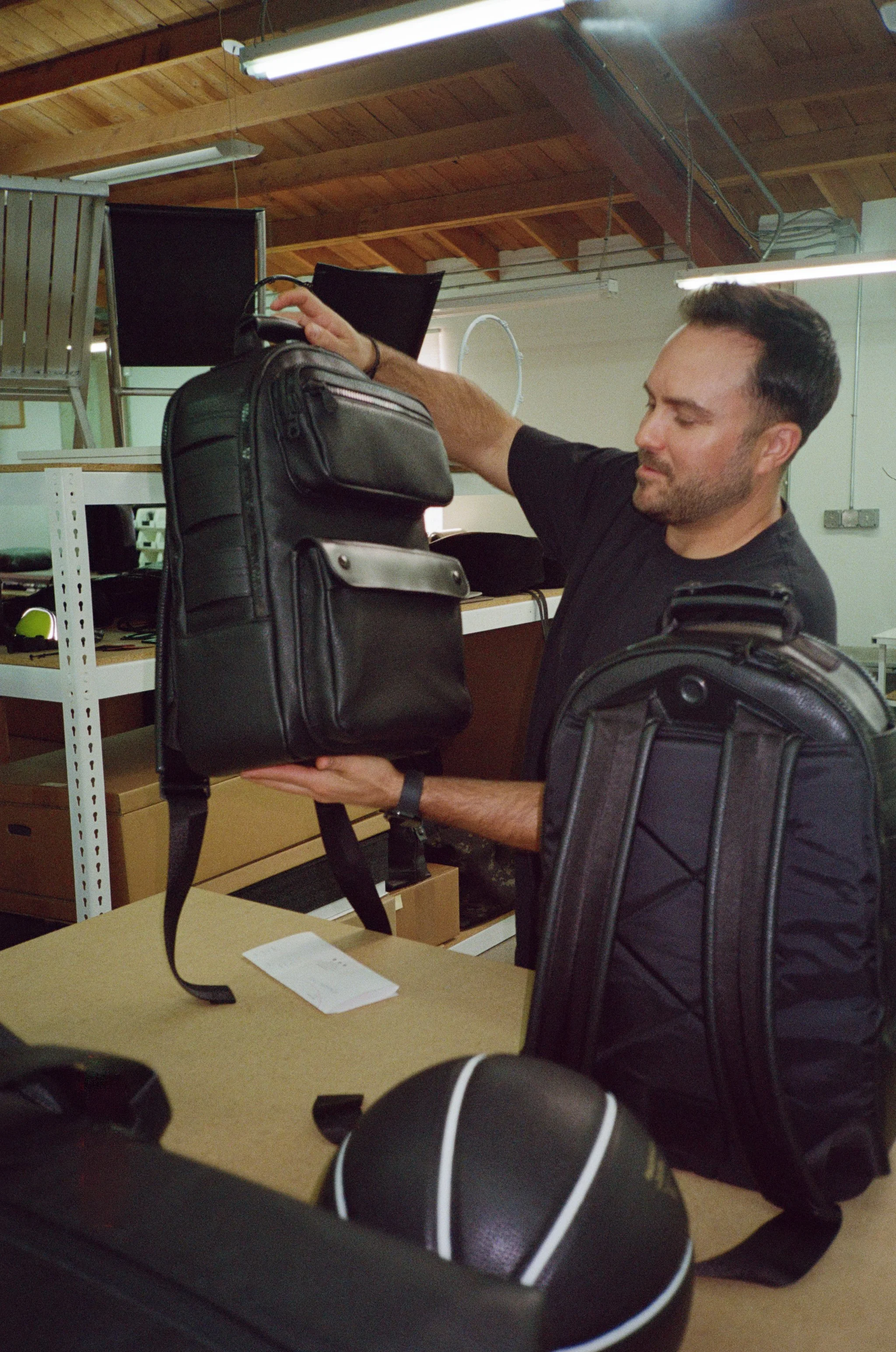
Spencer Nikosey with his sketches and a prototype of a new bag he's currently developing.
Yes, both of your parents were designers—your mom at Motown and Elektra, and your dad creating iconic album covers like Saturday Night Fever. What was it like growing up in that environment, and how did it shape the way you approach your own work?
I was always encouraged to follow whatever interests I had. When I was into baseball, my dad would go in the backyard with me and throw a baseball, play catch, teach me how to throw a football. My mom would be showing me colors and paint.
When I got interested in drums, my parents got me a snare drum and said, “If you keep at it, maybe we’ll get you a whole drum set.” I had to earn it, though.
I was into a lot of things as a kid. Skateboarding, snowboarding, BMX racing and jumping, roller hockey, rollerblading , just a lot of stuff. Especially with skateboarding, I was building my own ramps and making my own. I was painting the bottoms of my skateboard decks with my own imagery.
And I think that’s important. I was never really told what to be interested in. I was encouraged to explore whatever I was naturally drawn toward.
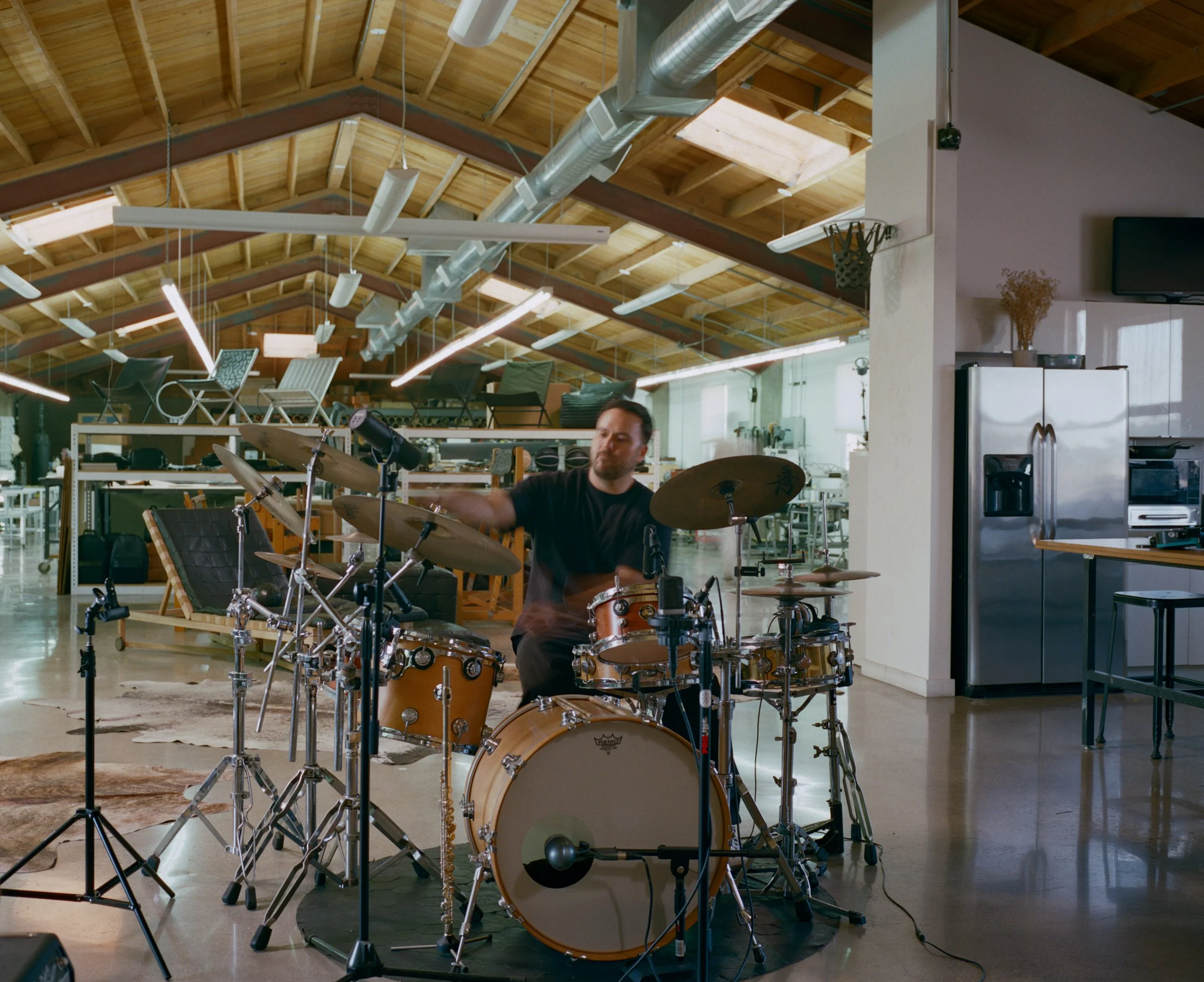
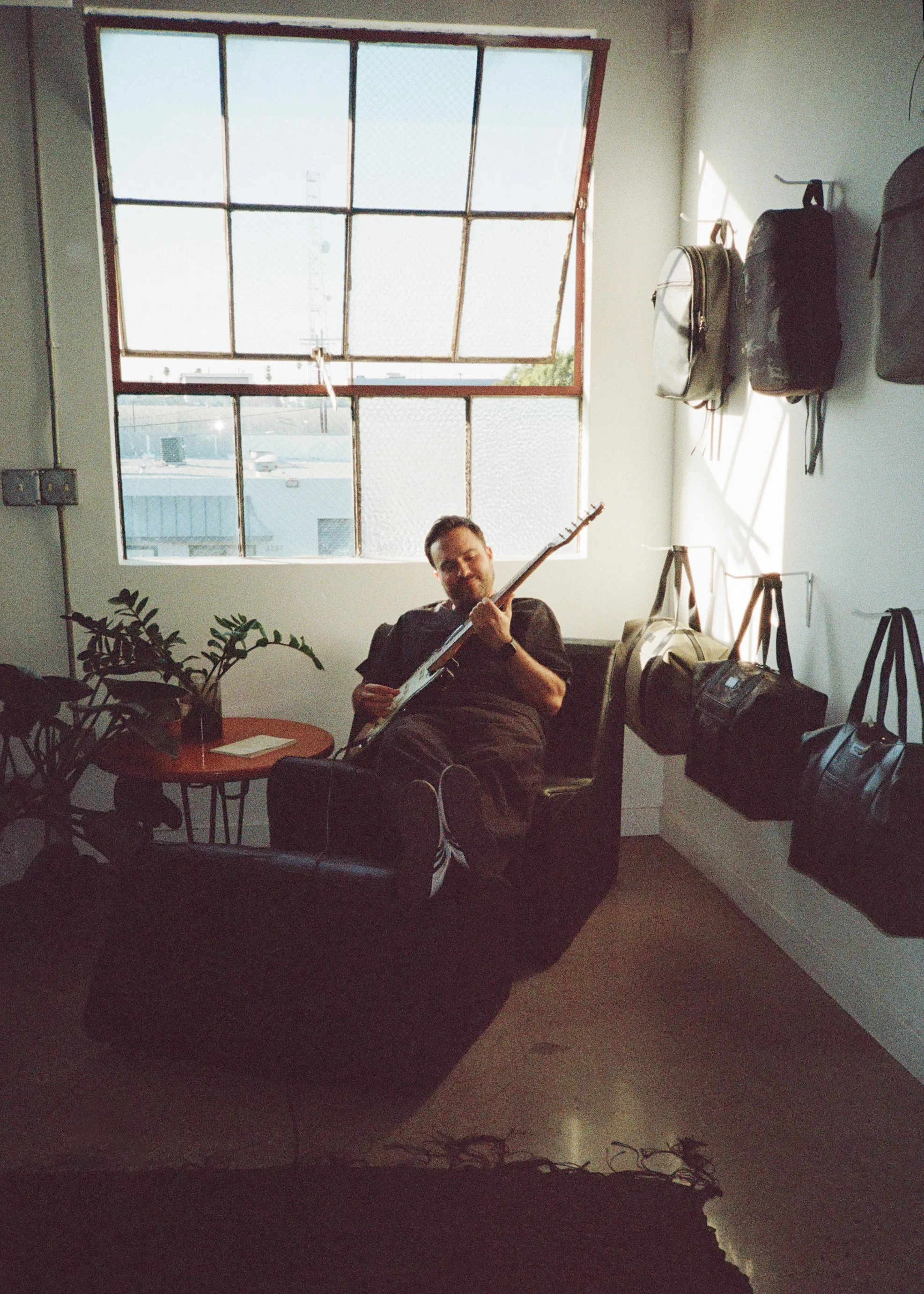
Spencer at Killspencer Atwater HQ, where drums, a grand piano, and a variety of other instruments greet you as you walk in.
People who grew up around skateboarding and action sports were exposed to design early on, through board graphics, apparel, magazines. Do you think that influenced your creative path?
Totally.
For me, it started with wanting to play guitar, but my fingers were too small because I was just a little kid. So instead I got into drums. Once I started, I became serious about it, taking lessons, practicing constantly, and eventually playing in bands throughout junior high and high school.
Because I was also interested in art, I naturally became the person designing flyers, organizing shows, and shaping the band's identity. Looking back, that was probably my first experience with branding and creative direction.
At the time, I thought music would become my career. I was good at it for my age, and that gave me confidence to keep going with it. I still play drums almost every day and I love it, but it ultimately became a passion rather than a profession.
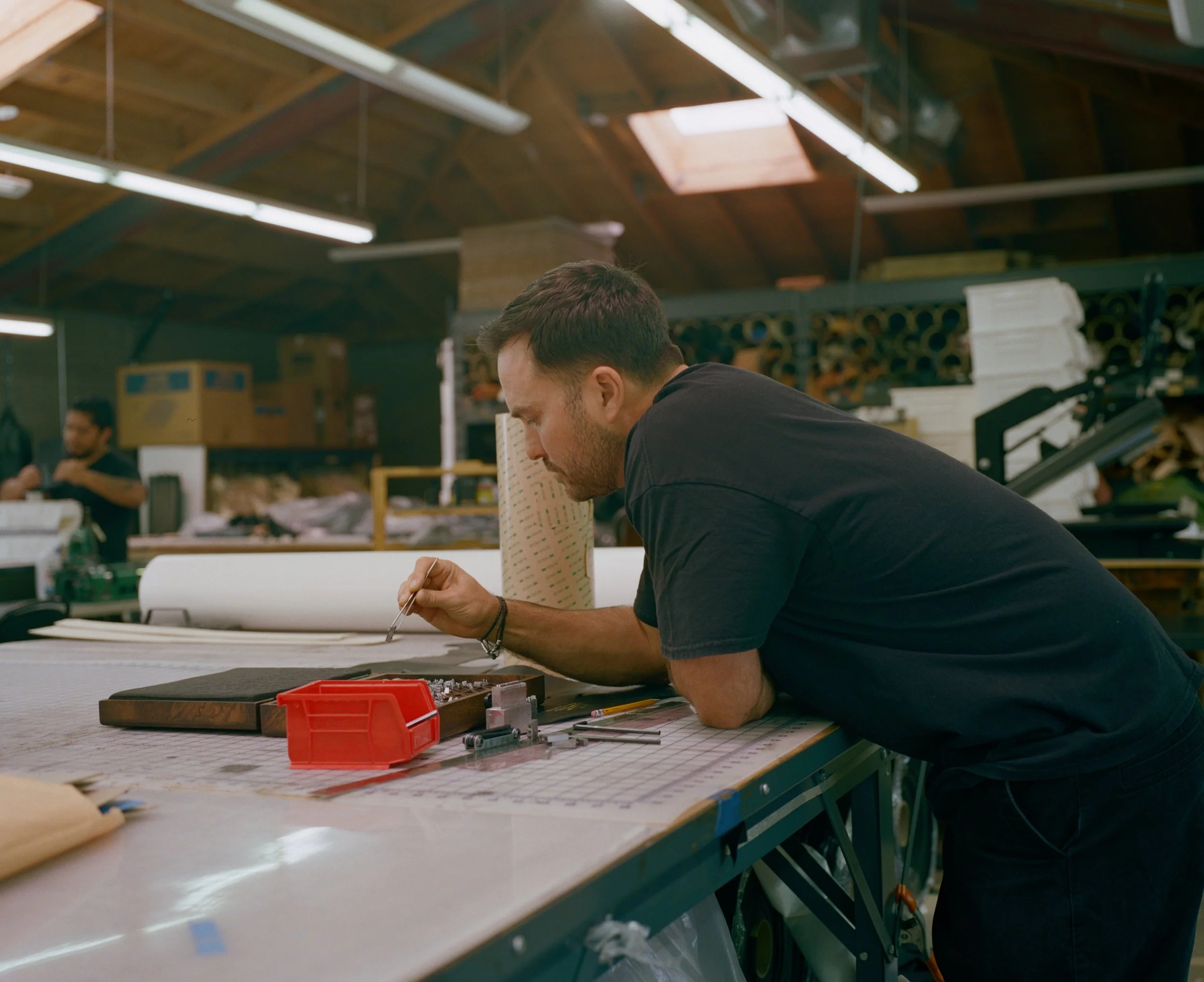
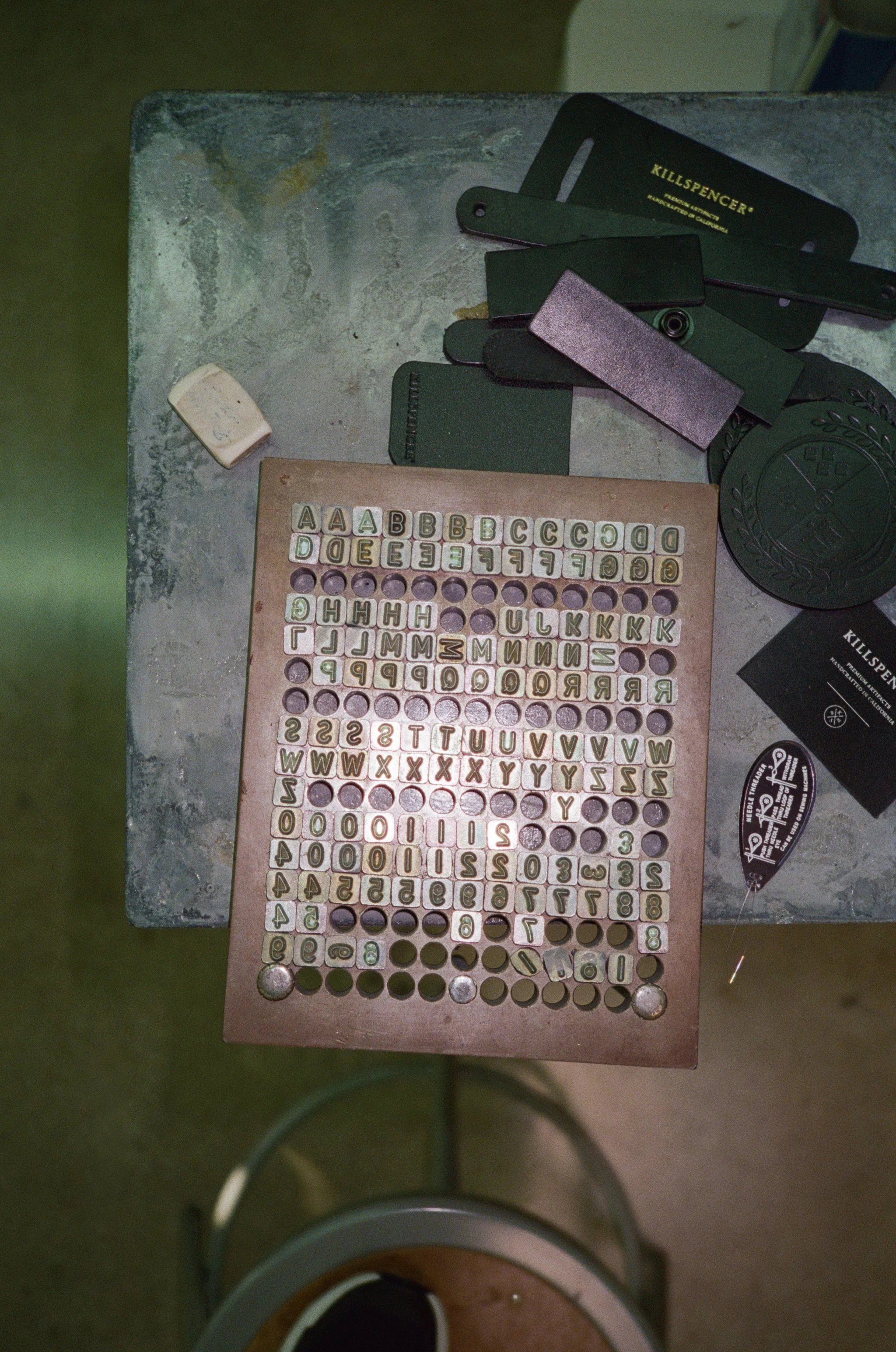
Was there a moment in your life when you realized, “This is what I’m meant to do”? A moment when you knew you wanted to pursue design and invention rather than music?
When I was in seventh grade, I was really into skateboarding. My friend Mikey and I would skate all the time, and we had this little skate crew where we’d go out, take pictures, and document everything we were doing.
One day I remember thinking, “It would be so cool if I could jump off stairs and have the skateboard attached to my feet like a snowboard.”
So I went into the garage and started figuring it out. I found some webbing straps, cut them up, grabbed a screwdriver, and basically screwed this setup onto the skateboard so my shoes could strap in. The bindings were removable if I needed to bail, but the board stayed attached to my feet when I jumped.
It was this homemade snowboard-skateboard hybrid that I called the Binder Board.
Mikey and I each made one, and suddenly we could do all these tricks we'd never been able to do before—spins, grabs, jumping down stairs while staying connected to the board. We took all these photos because, to us, it felt like we had invented something completely new.
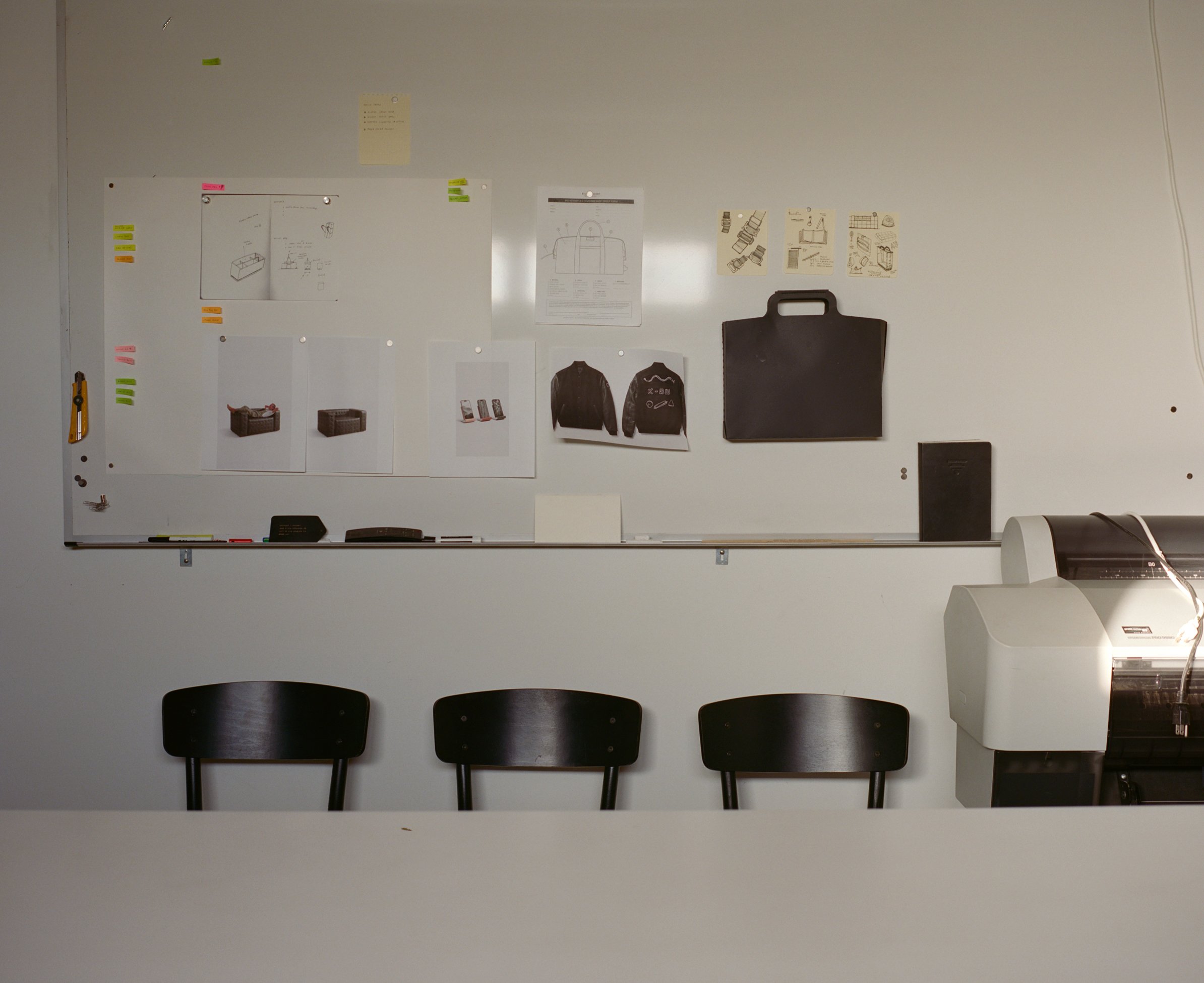
In the meeting room, a whiteboard covered with drawings, photos, and sketches for future Killspencer products & collabs.
Looking back, I think that was one of the first moments where I realized how much I loved inventing things. Not just using something that already existed, but imagining something I wanted to see in the world and then figuring out how to build it.
“I think that experience became the beginning of everything for me, the realization that I loved invention, that I loved taking an idea that didn’t exist yet and figuring out how to make it real.”
We even started this tiny skateboard company and sold Binder Boards to our friends. It was a junior-high, maybe early-high-school kind of venture, but it was so fun because we were making something that didn’t exist anywhere else.
And this was before the internet, so we couldn’t just go research ideas or see if someone else had already done it. It was entirely our own thing. That made it feel special. Even if it was just a small group of kids in the Valley doing this weird skateboard experiment, it felt like we had discovered something.
I think that experience became the beginning of everything for me, the realization that I loved invention, that I loved taking an idea that didn’t exist yet and figuring out how to make it real.
Later, when I was at California College of the Arts in San Francisco, I had another moment like that.
I was living in the dorms in Oakland and taking BART into the city every day. Once I got into San Francisco, I had to go down these really steep hills to get to campus. I’d be carrying a big art portfolio case, a backpack, a bunch of other stuff, and I also had a skateboard. I would try to skate, but I couldn’t stop properly because I had so much stuff on me. I wasn’t good enough yet to really control the board on those hills. So I went into the model shop and metal shop at school and invented a brake for my skateboard.
I made it out of metal with a spring mechanism that ran through the board and connected to the trucks. I could just press it and it would bring the board to a stop. It didn’t weigh much, and it let me safely control my speed on those steep hills. People were like, “Whoa, how did you do that?”
That was a really powerful moment for me because I realized I could build solutions to problems. I wasn’t just working within what already existed - I could actually change the tool to fit what I needed. That was when I started thinking seriously about switching from graphic design into industrial design. I realized I didn’t just want to design things. I wanted to make them.
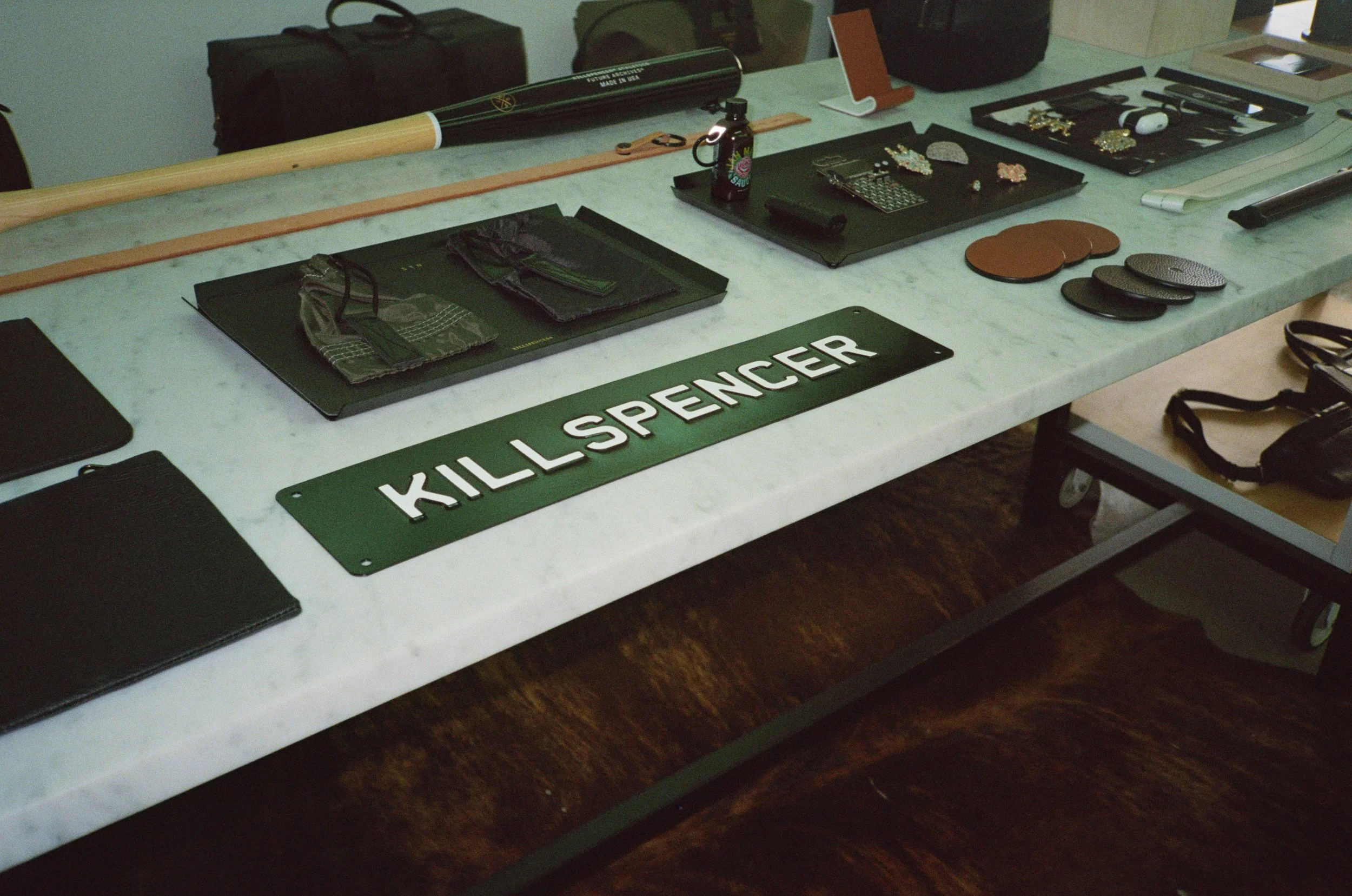
The display area featuring past and current Killspencer products and collabs.
Did your parents ever share advice that stayed with you—something that still influences the way you create or even the way you live?
I’m constantly being given advice by my parents. My dad would always say, “Keep your head in the clouds, but keep your feet on the ground.” So keep dreaming.
I have these crazy ideas, like, “Let’s build a golf simulator in the factory,” or even the fact that I have a recording studio here is kind of out of left field—but those things enhance the daily vibe.
“Keep your head in the clouds, but keep your feet on the ground.”
I think it really comes down to trying to be consistent and focused. Just get to work and keep working. By doing that, you start to uncover parts of the creative process you didn’t even know were there. You become a master through true grit, by doing it over and over again.
At the same time, you have to have other things outside of the simple thing you do. You have to get out into the world, experience things, and bring ideas back. Otherwise it’s just not the same.
For me, I have music, I have sport, I have design and invention. When I’m drawing, I’m thinking about music. When I’m playing music, I’m thinking about drawing. When I’m playing tennis or frisbee, I’m thinking about inventing things. It all kind of works together.
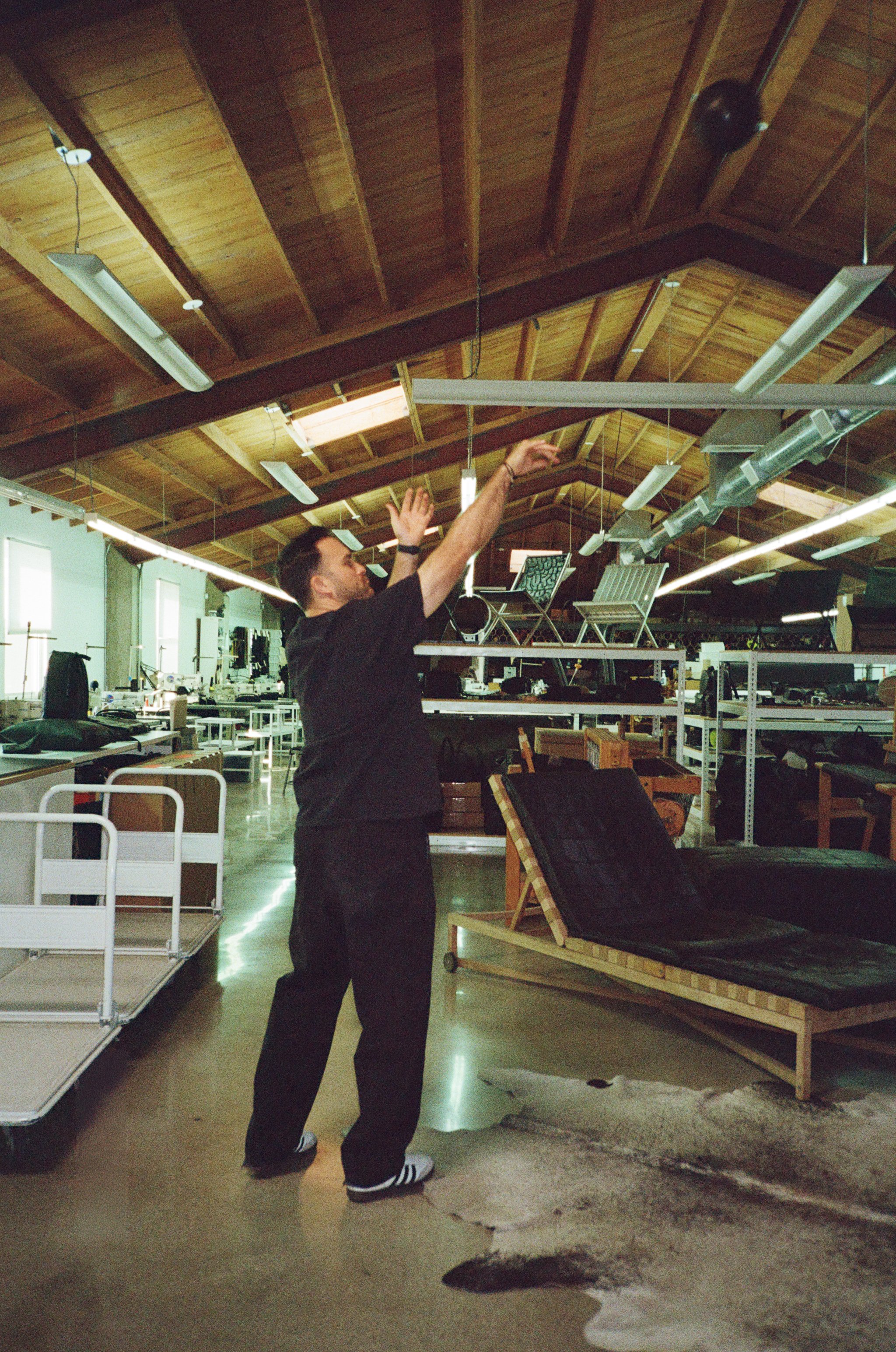
Spencer taking a moment away from product development for a basketball break in the studio.
I’ll draw as much as I have energy for, and then when I’m done with that, I’ll go play music. I’ll hop on the piano and practice some chords. Then I’ll get bored of that and go back to drawing. Or I’ll go into the factory and build something, 3D print something, laser cut something, use the sewing machines.
It’s all different materials and tools, but it all feeds into the same creative process.
It’s not a normal way of working, but it’s just how creativity works for me.
Industrial design was your training, but leather became your medium. Was there a defining moment—or a series of moments—when you realized leather was what you wanted to work with?
I studied Industrial Design at ArtCenter College of Design in Pasadena, and when I was there the school was incredibly competitive. You were pulling all-nighters all the time because they gave you so much work.
As a student, I was really into the idea of inventing things and building products, not just designing the product, but making the video, creating the music, designing the packaging. I was basically building little companies around each of my ideas.
What frustrated me was that we were making all these fake products. You’d spend weeks creating a handheld digital device, but it didn’t actually work. It was a model of what the thing could be. I wanted to make something real. Then I had the opportunity to design and make a bag.
When I finished it, I realized it wasn’t a prototype, it was the actual product. Holding something in my hands that I had designed and made myself was a huge moment. That was when I thought, “Oh shit, this is real. This is what industrial design is.”
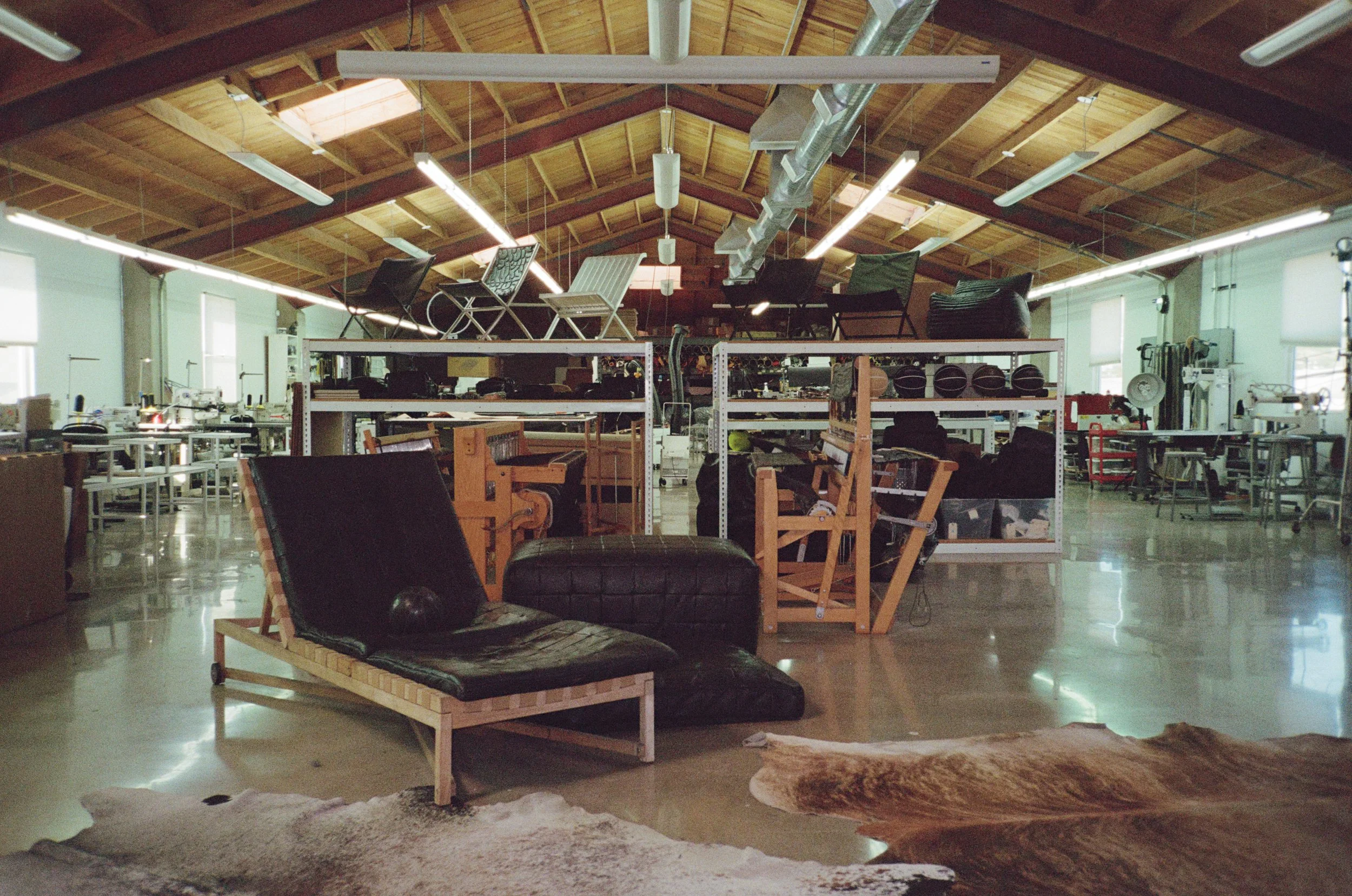
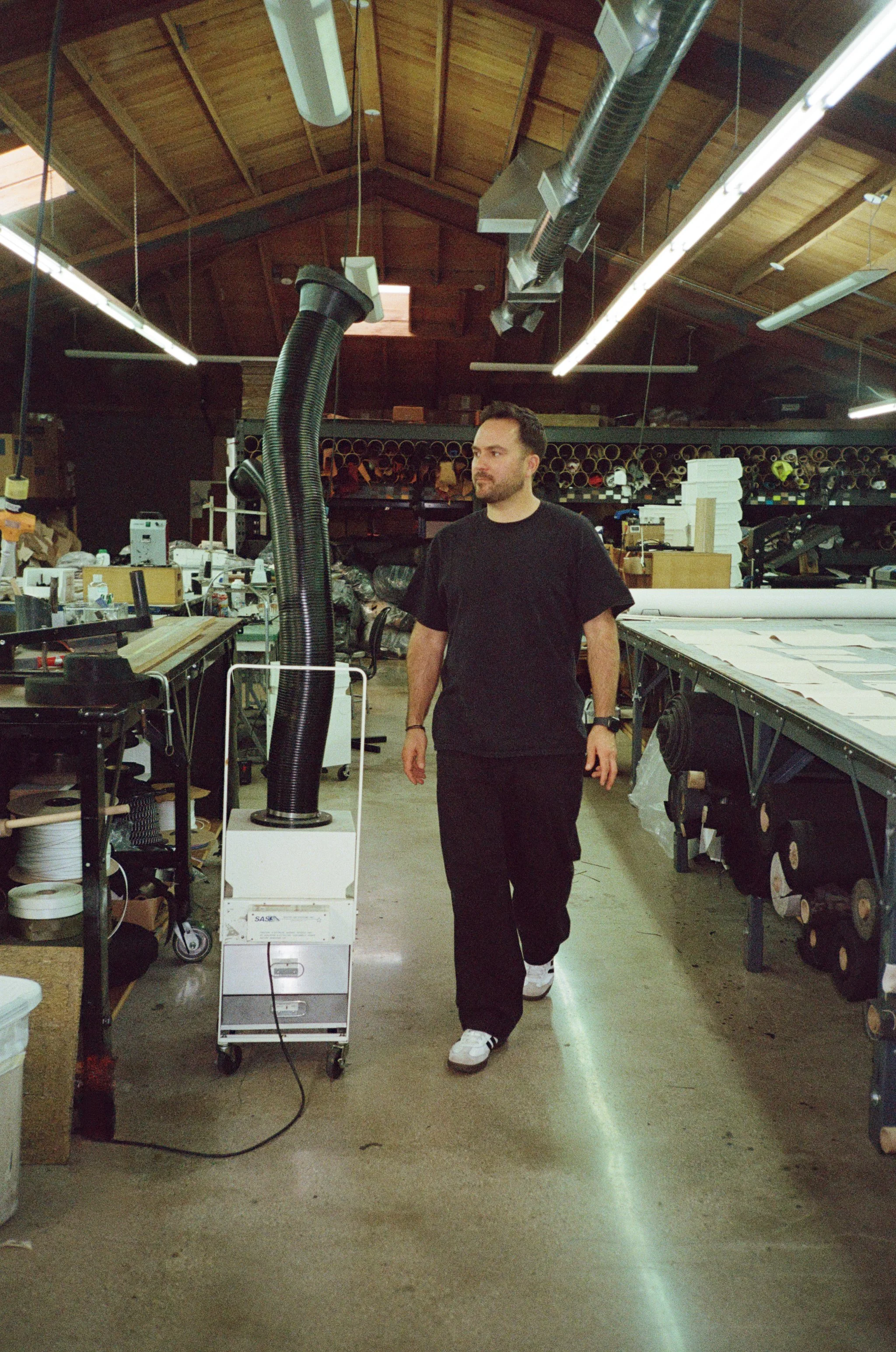
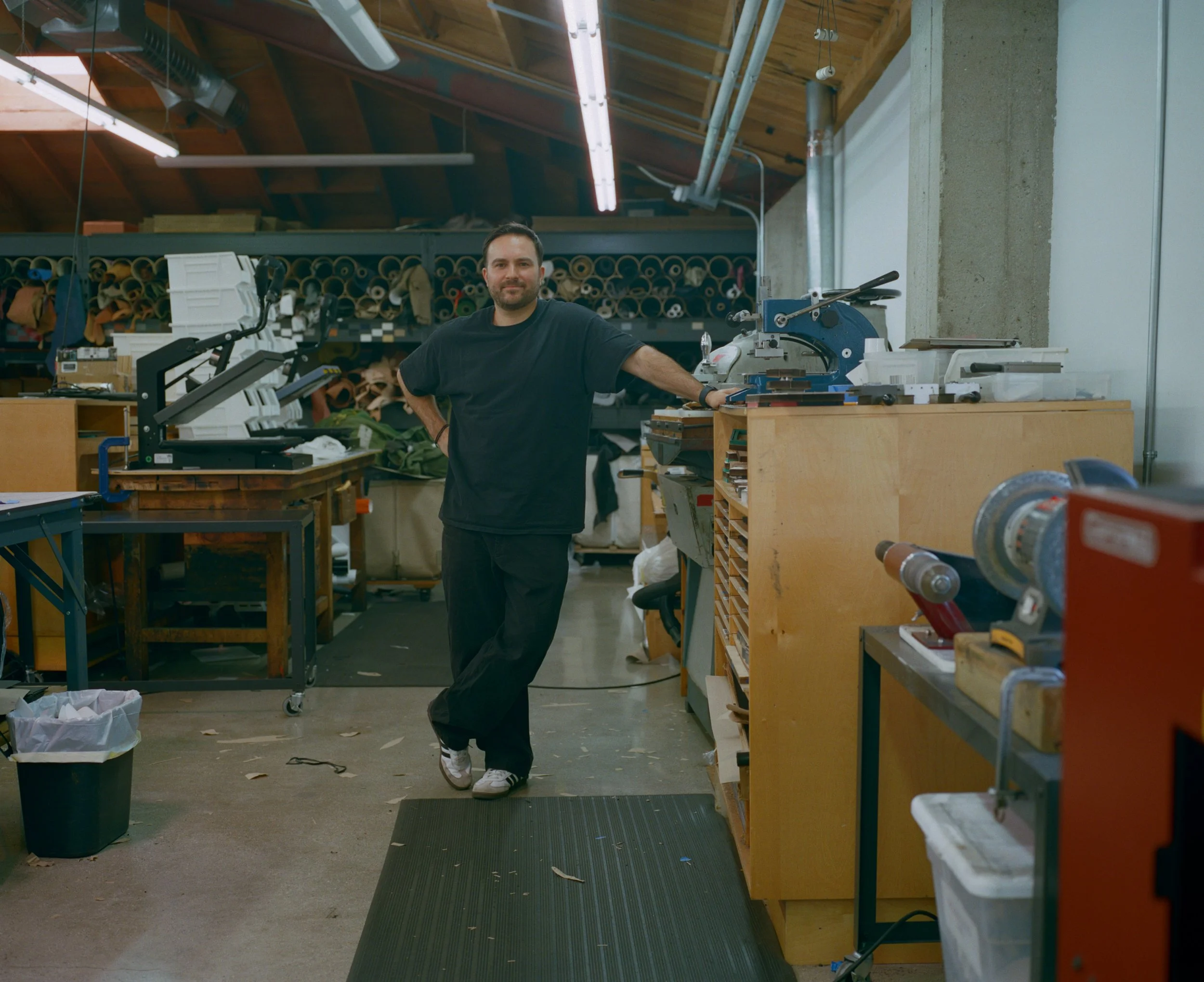
Killspencer Atwater HQ in Los Angeles
“At my senior show, I launched a brand. I showed a collection of bags, a website, packaging, a video, an entire world. Everyone was like, “You’re not really supposed to do that. You’re supposed to get a job at Nike or Apple.” But I didn’t want to do that. I wanted to start my own company.”
Making a bag was this incredible shortcut between an idea and a finished product.
I took a repurposed military truck tarp that had come off a Humvee from an American military museum, washed it, cut it up, bought an industrial sewing machine, and hacked together a messenger bag that I wanted for my laptop.
But I made it. I figured it out. I found this amazing military parachute harness buckle, screen-printed “Killspencer” onto it, and built the bag around that.
I actually had the Killspencer name while I was still in college. Around my sixth or seventh term, I decided I was just going to make all my projects under this fictional company. So by the time I graduated, I wasn’t really presenting student work anymore.
At my senior show, I launched a brand. I showed a collection of bags, a website, packaging, a video, an entire world. Everyone was like, “You’re not really supposed to do that. You’re supposed to get a job at Nike or Apple.” But I didn’t want to do that. I wanted to start my own company.
Your first bags were made from repurposed military canvas. What eventually attracted you to leather?
It kind of happened by accident.
I was finding all these amazing vintage, archival rolls of canvas from the '50s and '60s—Korean War-era surplus, old military fabrics hidden underneath piles of stuff in surplus stores.
Then I started noticing other designers finding the same materials.
I’d be in these places buying fabric and run into people who worked for brands like Ralph Lauren Double RL. They had the resources to buy entire inventories, and I got frustrated because a lot of the secret sauce I was finding was getting scooped up by bigger companies.
So I started thinking about how to make the same kind of bag, but with materials that would last even longer. That’s when I started exploring leather.
“That combination became the DNA of Killspencer. Leather, indestructible materials, and the finesse of a minimalist approach. No logos. Just highly functional design.”
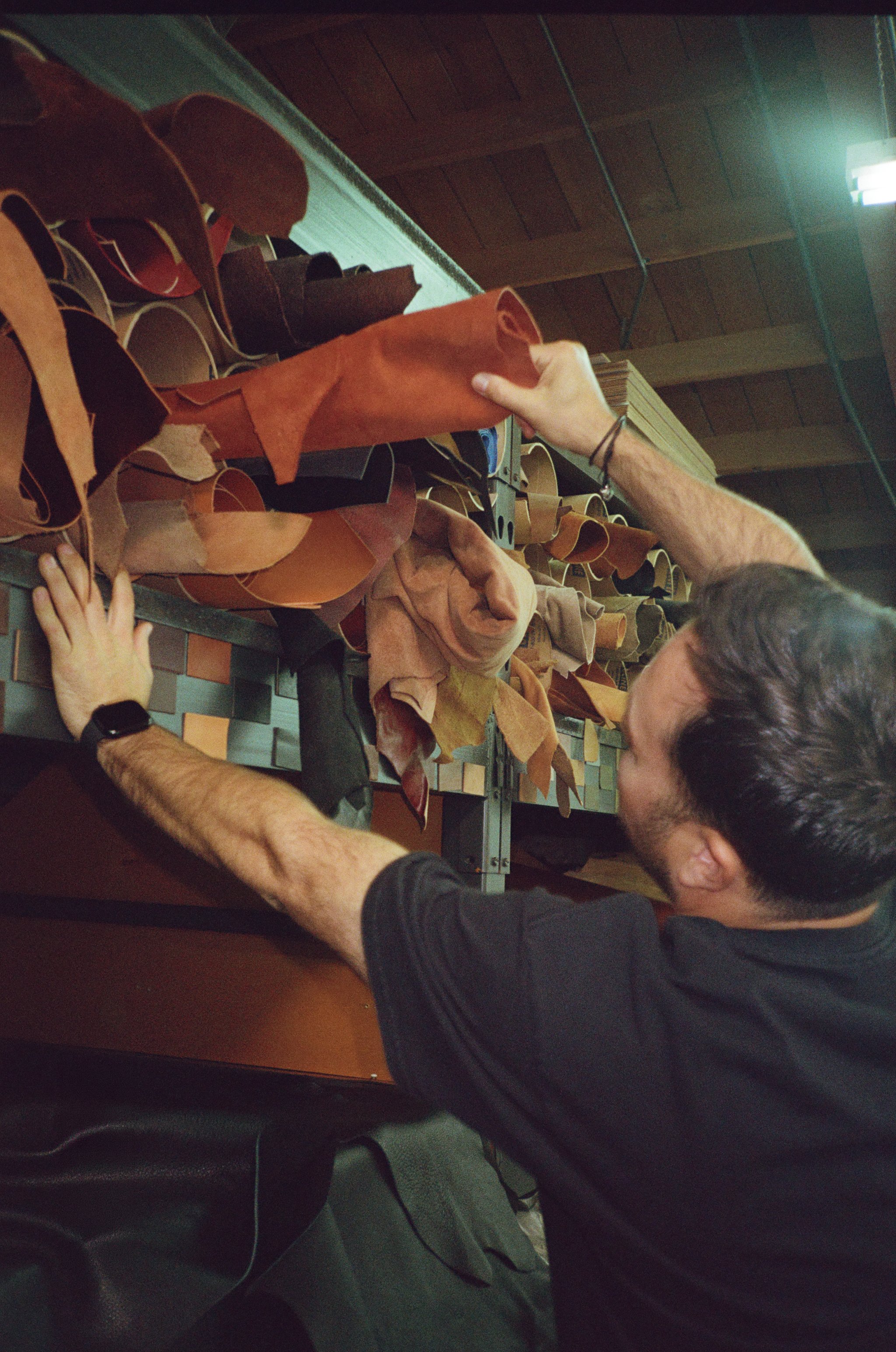
I found different types of leather—bullhide, pebbled leather, really thick durable hides—and started combining them with military hardware, 4,000-pound-test webbing, waterproof zippers, Swiss Riri zippers, and all these incredibly durable components.
That combination became the DNA of Killspencer. Leather, indestructible materials, and the finesse of a minimalist approach. No logos. Just highly functional design.
What I love about leather is how it ages. That camera strap you've got is probably ten years old, maybe older. It has wear, but it looks beautiful. That's when you know you chose the right material.
Sometimes customers send us products back because a zipper finally wears out. We'll replace the zipper and they'll tell us, “Don't change anything else. We love the patina. We love how soft the leather has become. Just fix the zipper.”
I love that. The product feels new again, but it still carries all of its history.
What is it about working with leather that keeps people devoted to it for a lifetime?
You think, “Oh, I'm going to make a bag.” Then you get into it and realize there are so many different ways to do it, and so many techniques hidden beneath the surface.
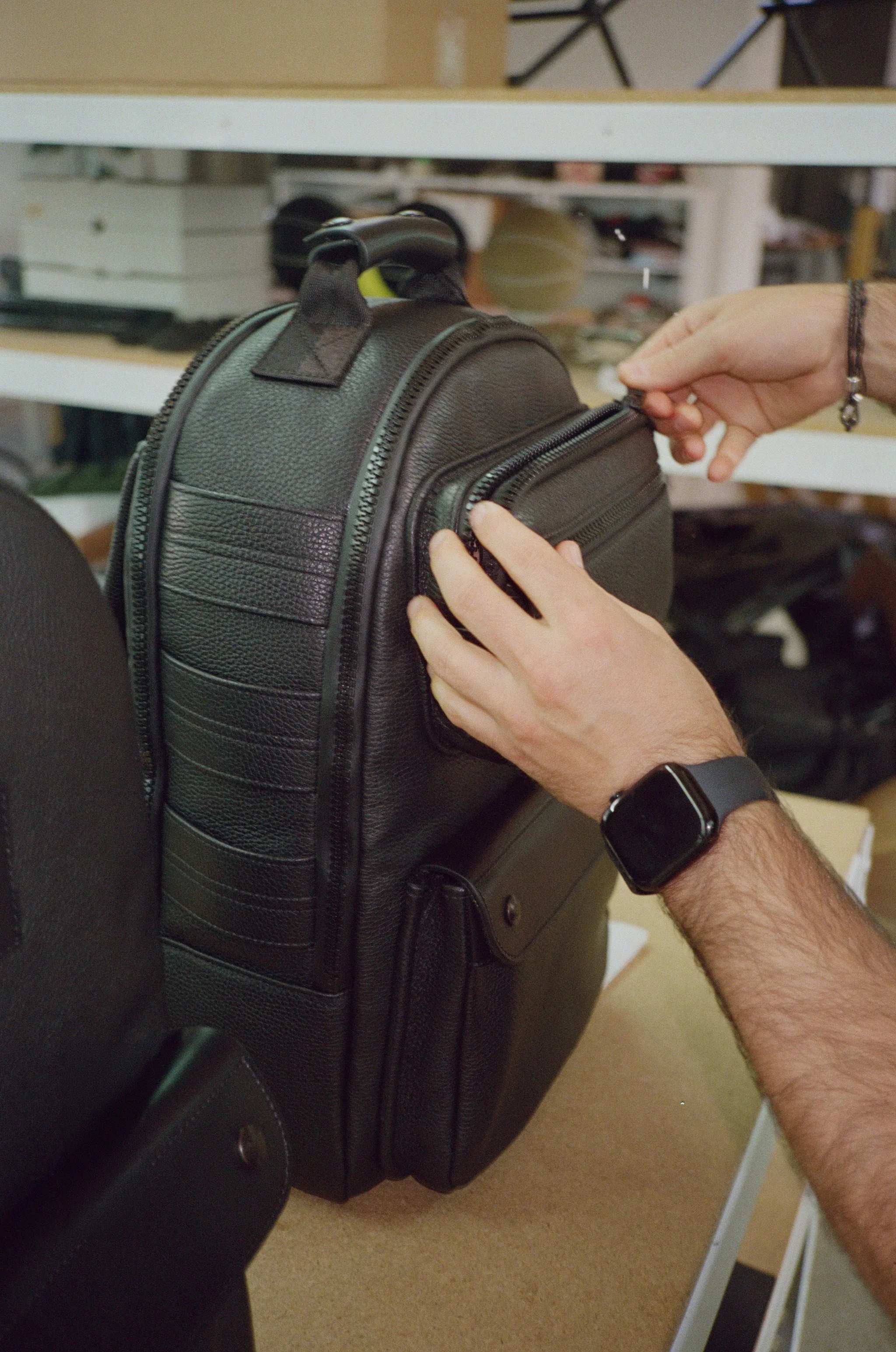
As you go deeper into leathercraft, you realize there might be forty or fifty different techniques in a single bag, and mastering each one can take years.
“Some of our products have been around for fifteen years now and they're still evolving. It's really a never-ending craft. You never master it. You just keep going.”
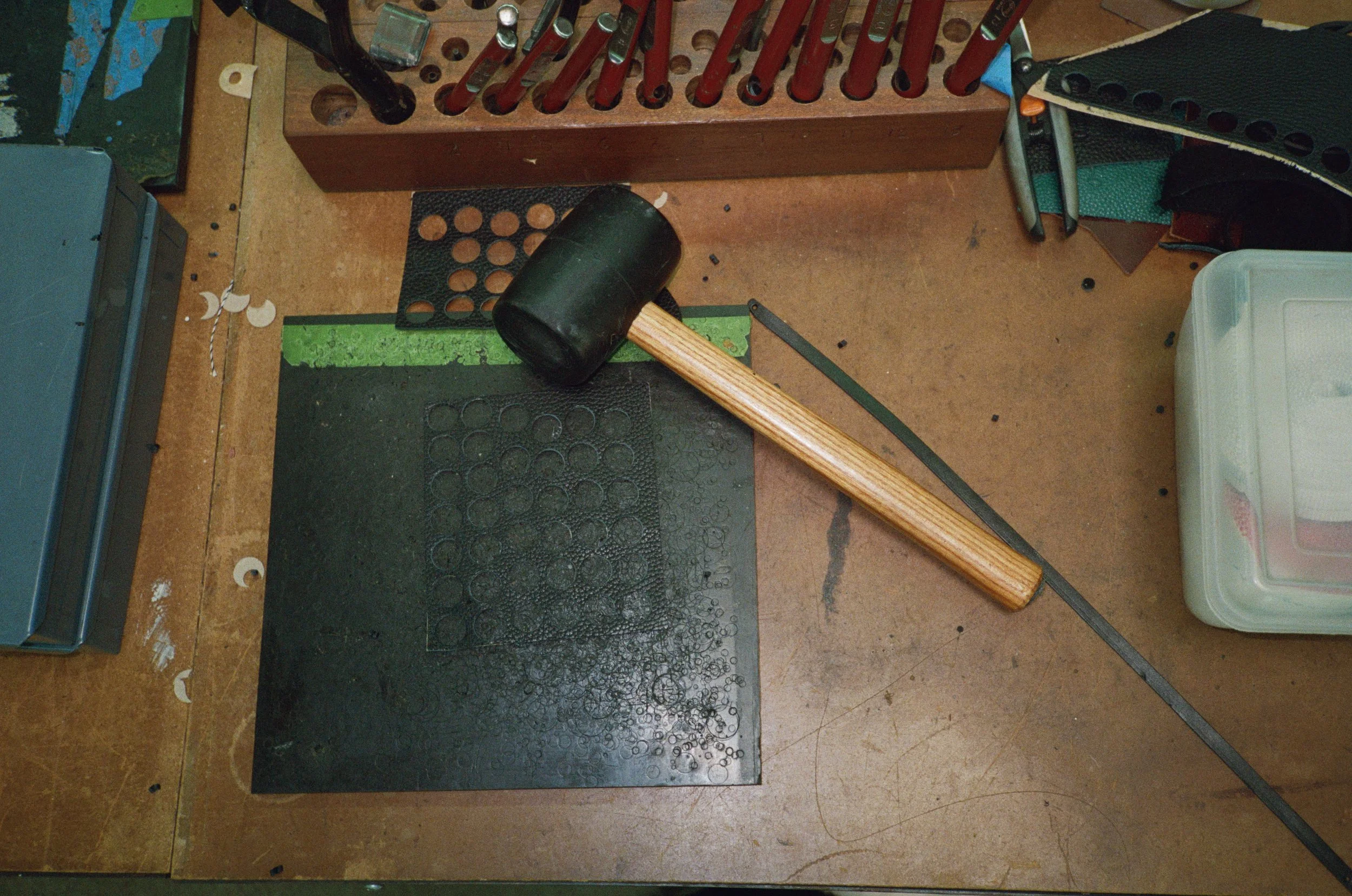
What we're doing now, after sixteen years in business, is combining all of that accumulated expertise into every product. It's little things. Skiving material to a specific thickness. Gluing it a certain way. Hammering it before stitching. Wrapping leather around a buckle so it holds structure before the zipper even goes in. There’s a lot that goes into it.
It’s kind of like tennis. You’re learning a forehand, a backhand, a serve, slices, drop shots. Each one takes years to really understand. To become a complete player, you have to understand all of it. Leathercraft is the same way. A lot of people design bags, but they don’t know how to build them. From day one, we’ve been making our products ourselves, so we understand not just how they’re designed, but how they’re actually constructed. And when something goes wrong, it comes back to us. That feedback loop made us better very quickly.
Over time we've refined things, improved things, and kept iterating. Some of our products have been around for fifteen years now and they're still evolving. It's really a never-ending craft. You never master it. You just keep going.
Craft like yours takes years to refine. How did you develop your skills? Through formal training, self-teaching, mentors, or a mix?
It started with me wanting to learn how to make a bag. At the time, one of my mentors was Bobby Chang, who helped start Incase. I asked him, “Hey Bobby, I want to learn how to make a bag. What do I do?” And he said, “Buy a sewing machine and figure it out.”
“I asked him, “Hey Bobby, I want to learn how to make a bag. What do I do?” And he said, “Buy a sewing machine and figure it out.”
I was like, “No, no, no. I’m a designer. I design things. Somebody else makes them.” And he basically refused to teach me. He said, “I’m not going to help you unless you buy a sewing machine and figure it out yourself.”
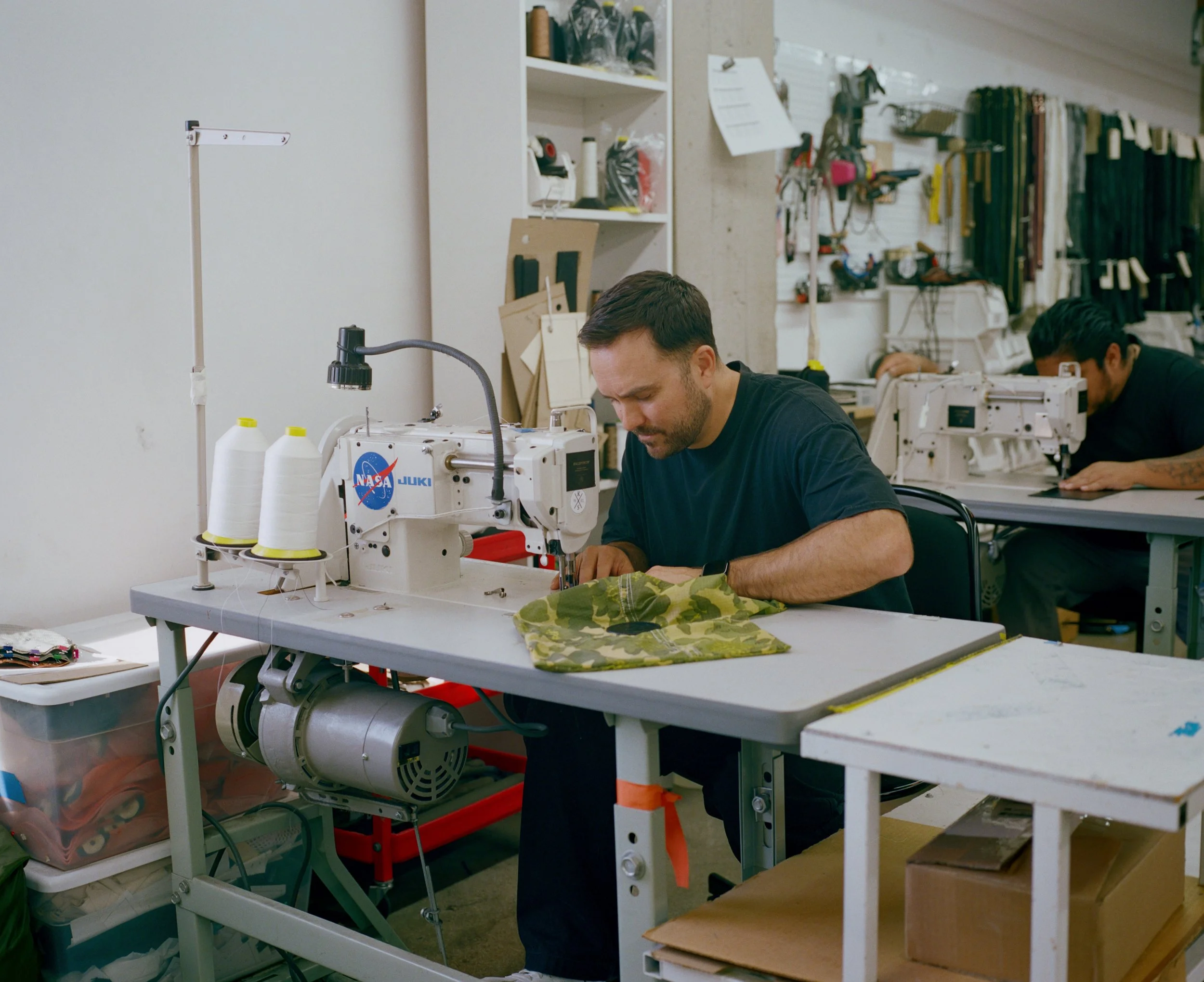
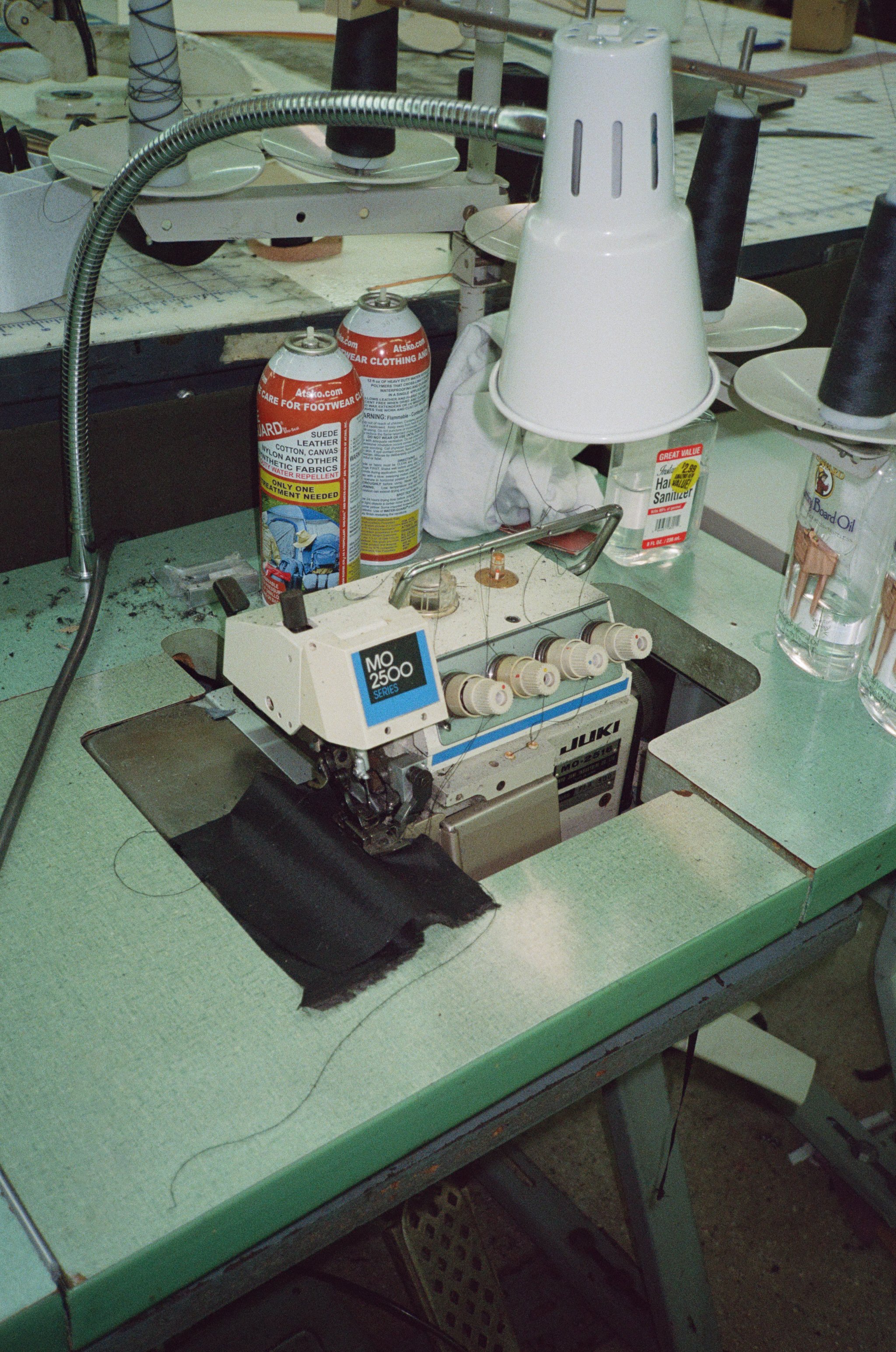
So I saved up $1,600 and bought an industrial Juki walking-foot sewing machine while I was still in college. It shows up at my apartment. I drag it upstairs. I’ve never sewn in my life. I’m reading the manual, trying to figure out how to thread the needle, load the bobbin, watching YouTube videos. I literally taught myself how to sew.
Within two days I made my first bag. And I remember thinking, “Oh my God, this is so cool. I have a factory in my living room.”
That gave me a lot of confidence because I realized I could figure things out.
After that, I started going deeper.
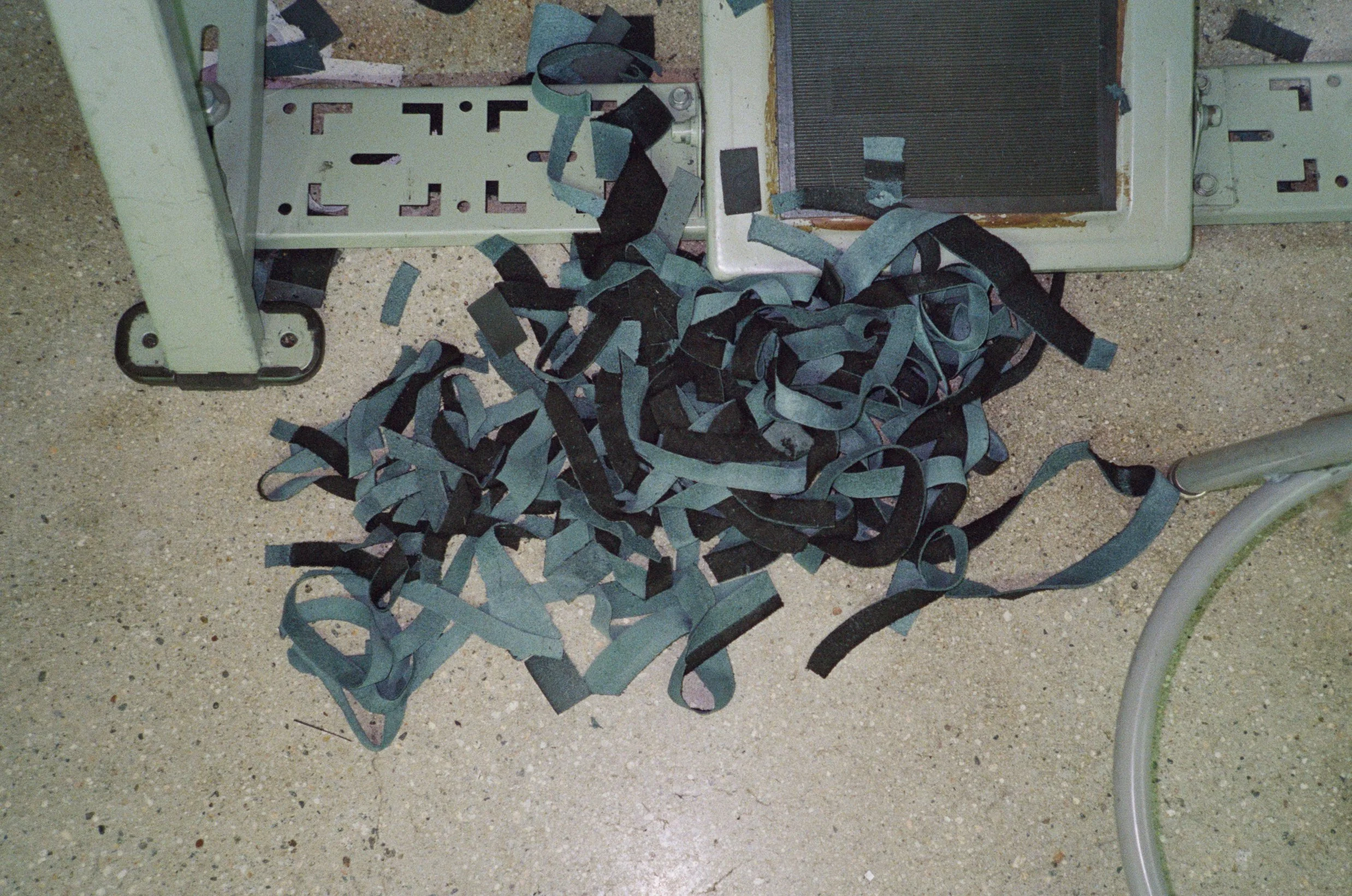
I visited something like forty-eight or forty-nine factories around Los Angeles, learning about overlock machines, Union Special machines, buttonhole machines—everything I could get access to. I was trying to understand how things are actually made in the real world.
Then I would take pieces of that knowledge and apply them to my own products.
“I’m pretty fearless about picking up new tools and learning new processes if they help me make something I want to see in the world.”
At the same time I was learning laser cutting. Later, after doing a project with Nike, I bought my first laser cutter and suddenly had even more capability.
Now that’s expanded into 3D printing, digital fabrication, metal casting, all kinds of things.
I’m pretty fearless about picking up new tools and learning new processes if they help me make something I want to see in the world.
The toolbox just keeps getting bigger.
And now, with AI, ChatGPT, and all these other tools, you can get to ideas incredibly fast. You can visualize them, test them, refine them, and then find ways to actually make them real.
What tools do you consider essential?
It starts with a pencil.
Being able to draw is really important.
You need to be able to get an idea out of your head and onto paper.
Then it’s about translating that idea into something more technical. Maybe that becomes a vector pattern for a bag, maybe it becomes a 3D model, maybe it becomes something you laser cut or 3D print. That level of precision gives you a lot of power.
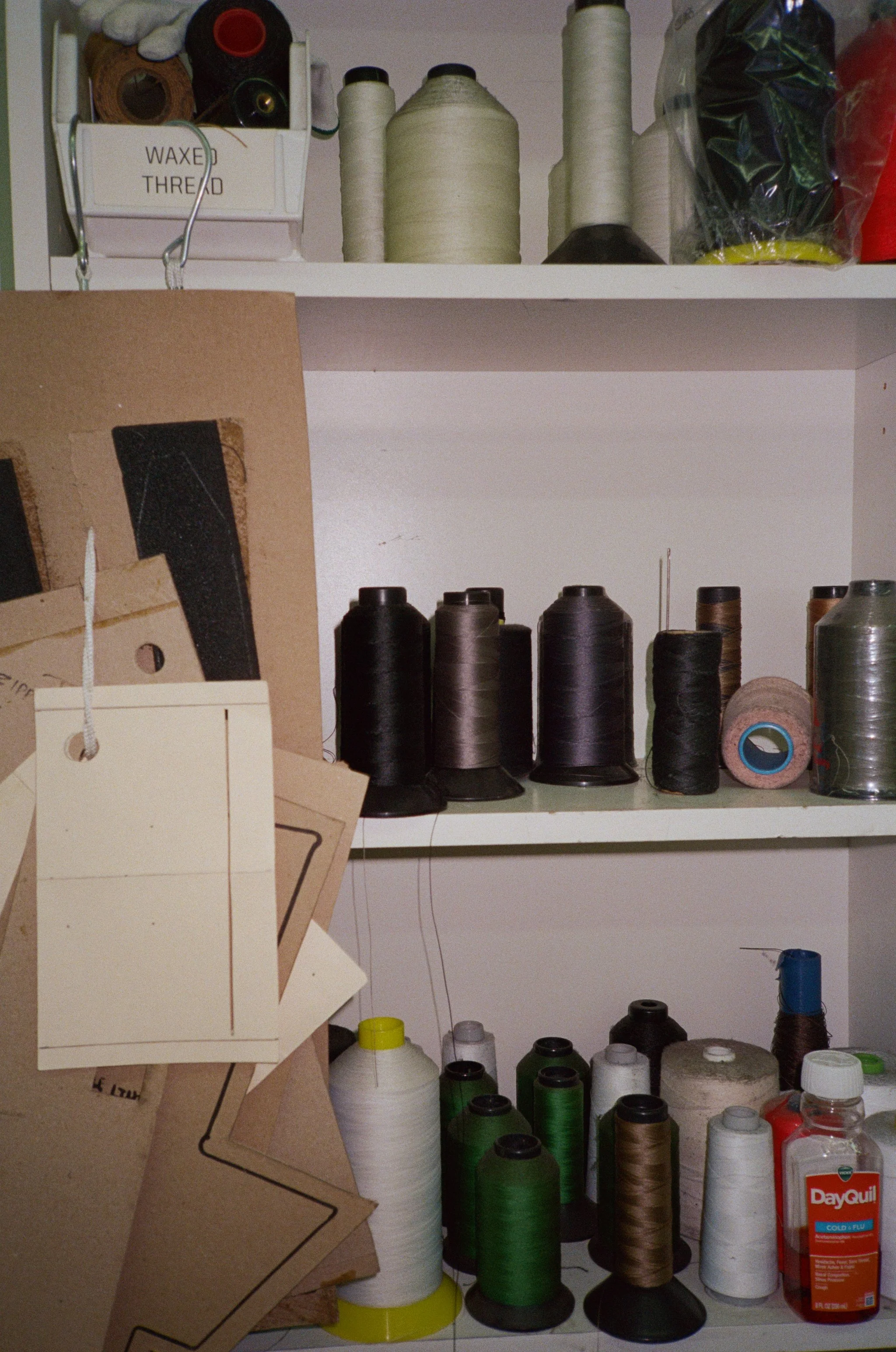
After that, there are the tools that help bring the product to life: skiving machines, sewing machines, specialty adhesives, finishing processes, edge painting. There are probably five or six core tools that are incredibly important.
But that’s really just the product side. Then there’s photography, filmmaking, storytelling, communication. Those are tools too.
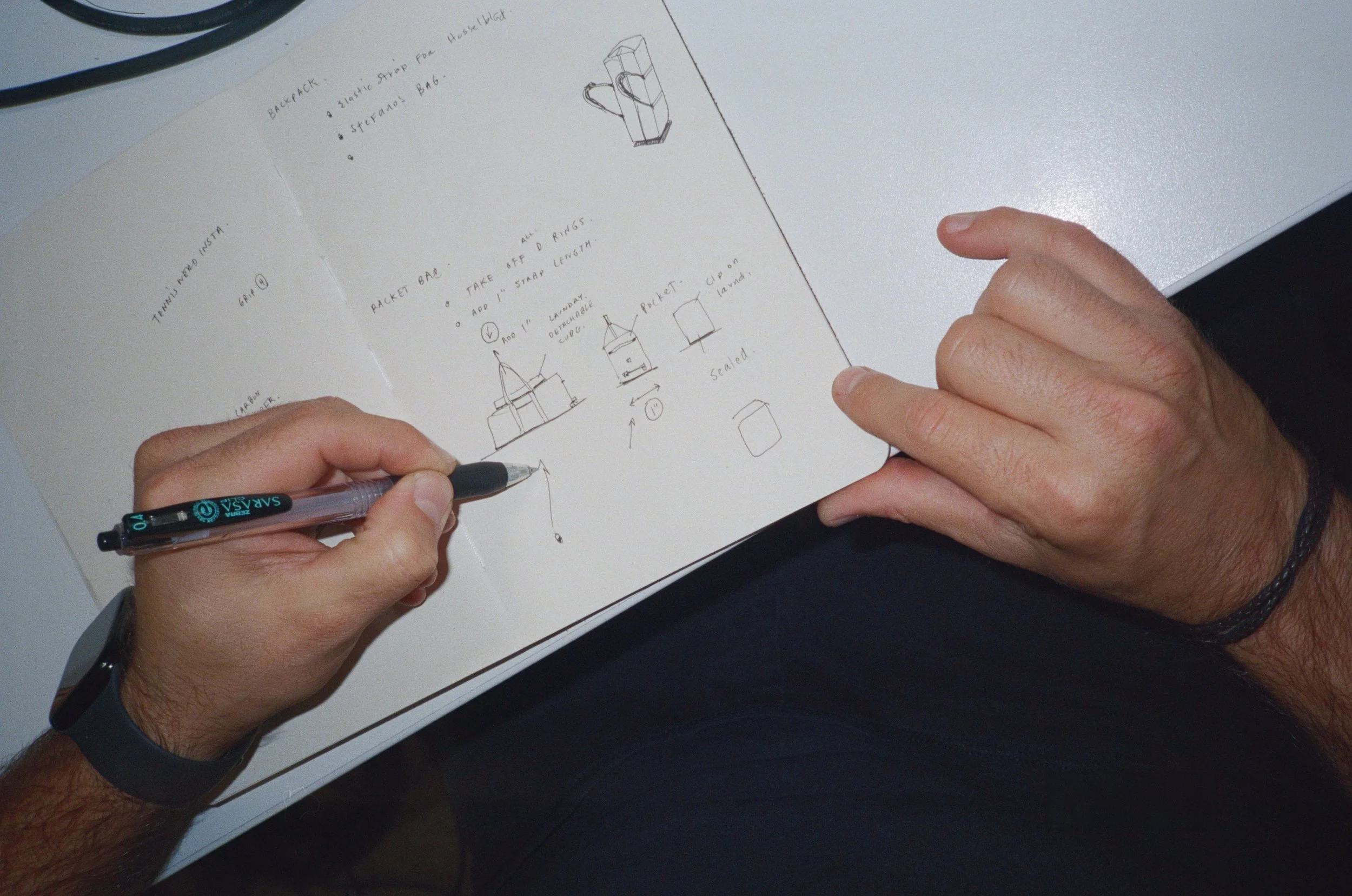
Everything starts with a sketch.
What mistakes do beginners make most often?
Maybe the biggest mistake is that they don’t make enough mistakes. By failing over and over again, you actually get closer to the end result much faster.
“Maybe the biggest mistake is that they don’t make enough mistakes.”
With 3D printing, I might make twenty or thirty versions of a part before I get it right. People talk about “fail faster,” and I think that’s true. The faster you fail, the faster you learn. I’d also say: don’t give up.There are so many projects where I hit a wall and think, “How am I ever going to figure this out?” When that happens, I’ll go work on something else. I’ll play music. I’ll go throw a frisbee with friends. I’ll go do something completely unrelated. Then I come back with fresh eyes and the solution is often already there. That reset is really important.
I’ve noticed the same thing with music. When I sit down at the piano or play drums, I’m not making a product anymore. I’m just creating sound. It puts me into a completely different headspace. Then when I come back to building something tangible, I feel more willing to experiment. And when it’s safe to fail, that’s usually when you find the real gem in a project.

When an idea sparks, what path does it follow to become real? From sketch to material, from concept to product—how does a vision take shape in your hands?
Everything starts with a sketch.
You can see it all over the studio, drawings, notes, little details from meetings. Whether it’s a bag, a piece of hardware, or a product for an athlete I’m collaborating with, it usually starts with drawing. Because I learned how to draw, I can get the idea out of my head and onto paper first. Then it becomes a process of figuring out how the thing actually gets made.
“Because I learned how to draw, I can get the idea out of my head and onto paper first. Then it becomes a process of figuring out how the thing actually gets made.”
Maybe I laser cut a piece of paper and hand stitch it just to understand how a seam comes together. Maybe I make a rendering. Maybe I 3D print a component to test a structure. Sometimes it feels like building a little piece of architecture.
It starts simple, but then it becomes a series of questions. How does this detail wrap around a corner? How do these materials come together? How do I make it stronger, cleaner, more functional? Eventually you get to the point where you're ready to build it in real materials. That’s when it becomes real.
But the R&D phase takes a long time. You have to be willing to use expensive materials just to see what the final thing looks like. And if it’s wrong, you make it again. Then you test it with real people. That’s how a lot of our products got better. Early on, friends would use our camera straps and tell us what worked and what didn’t. Over time, those small pieces of feedback shaped the product.
Even now, little details evolve. Something as simple as edge paint on leather came from years of understanding how products age and how to make them last longer.
It’s always sketching, prototyping, testing, refining. Over and over.
And how do you know when a product is finished and ready to launch?
For me, it’s never really finished. At a certain point it becomes really, really good, and that’s when you launch it. But even then, you know it’s just one iteration. There’s still room for improvement, and I actually think that’s a good thing because it allows you to come back later and find ways to make it better.
A lot of our bags have been in the collection for fifteen years, but they’re not the same bags we started with.The changes are subtle. Most people wouldn’t notice them. But those little refinements add up over time.
Music and tennis are big parts of your life. How do those passions influence your work and your perspective?
Tennis has shaped a lot of things in my life because I approach design and creativity like sport. A lot of the athletes I’ve become friends with have this incredible drive to get better through repetition, practice, and discipline. They're constantly sharpening the spear. I apply that same mindset to design. Just making it better and better and better. Constantly improving. Constantly innovating. Constantly pushing.
“A lot of the athletes I’ve become friends with have this incredible drive to get better through repetition, practice, and discipline. They're constantly sharpening the spear. I apply that same mindset to design.”
I think sport teaches you that excellence isn’t really an event. It’s a practice. And that mindset translates directly into creative work.
For people drawn to craftsmanship today—especially younger makers—are there books, courses, mentors, or resources that influenced your path?
The biggest thing for me was being around people who were true professionals. When I first started the company, I was making products at a small factory in downtown Los Angeles, and there was a craftsman there named Mauricio. He was incredibly good.
Every chance I got, I worked directly with him. I remember telling him, “One day I’m going to start my own company, and when I do, I want you to run it.” And he said, “Okay.” So when I started Killspencer, I brought Mauricio with me. Sixteen years later, he’s still here. He’s actually in the back right now.
“The philosophy became: learn from the best, then have the best teach everyone else. I’ve been learning from him, he’s been learning from me, and together we’ve spent years sharpening each other.”
Mauricio is a master craftsman. He’s taught everyone here how to make products at his level. So the philosophy became: learn from the best, then have the best teach everyone else. I’ve been learning from him, he’s been learning from me, and together we’ve spent years sharpening each other. I’ll show him a technique I found. He’ll show me a better way to construct something. I’ll visit a factory in Japan or China and bring back ideas. He’ll refine them. It’s a constant exchange. And honestly, having someone like Mauricio is incredibly important because he sees things I might miss.
I’m a designer and a craftsman, but I wouldn’t call myself a master craftsman. Making something once is one thing. Making it perfectly, over and over again, every single day, at a consistently high level, that’s something else entirely. That’s what he does.
And I think that’s how people really learn. It’s an apprenticeship. You learn by being around people who are truly great at what they do.
You’re often surrounded by incredibly creative people. How has being part of Los Angeles’ creative community influenced your path?
I think one of the things that’s really special about this space is that it’s multi-purpose and multi-disciplinary. You can come over for a cappuccino and hang out, and we might make a song, play ping pong, shoot hoops upstairs, or go into the factory and build something together.
There’s always some kind of creative energy happening. A lot of customers come in expecting to pick up a bag and leave, and then they realize everything is made right here. There’s a whole world behind the products. And a lot of those people end up becoming friends.
One of my customers, Omar Edwards, became a close friend after he noticed all the instruments in the studio. He said, “Oh, I see you have instruments.” And I said, “Yeah, let’s play music.” So he came by one Saturday night and we stayed up until five in the morning making music. Then he came back the next night and we did it again. Before long, he was inviting friends, I was inviting friends, and suddenly we had some of the most talented musicians in the world coming through here to make music. It was incredible.
That’s actually one of the reasons all the instruments ended up here. At my old place in Echo Park, the neighbor would literally pound on the ceiling because I was making too much noise. So I moved everything to the studio. And once we started recording here, it kind of took on a life of its own.
At this point we’ve done more than 400 sessions. I’ve even started releasing music on Spotify as Killspencer. I don’t really talk about it much, but we’re making music here almost every week. It’s honestly such a pleasure to be able to create like that.
Are there artists, makers, or ideas you’ve discovered recently that have inspired you?
A lot of the people who inspire me right now are musicians.
Stephan Moccio is one of them. The first time I heard his music, it felt like a breath of fresh air. There was so much noise happening in the world, and whenever his music came on I just felt at peace. The more I learned about his work, the more inspired I became. He’s written songs for Miley Cyrus, The Weeknd, Celine Dion, Andrea Bocelli. He’s operating at such a high creative level, and being around people like that is incredibly inspiring.
“Music has this ability to unlock ideas and feelings that are hard to explain. It opens something up. And I think a lot of creative inspiration comes from paying attention to those moments.”
Another huge experience for me was being invited to Shangri-La, Rick Rubin’s studio in Malibu. I got to spend time around Om’Mas Keith and watch him work with these unbelievably talented musicians.
Honestly, it changed my perspective. I felt lucky just to be in the room. There’s a certain energy in a place like Shangri-La. You can feel the history of all the records that were made there.
Lately I’ve also been listening to Rob Araujo, who’s an incredible piano player. Because I’m learning piano right now, I’ve become fascinated with understanding why certain musicians affect me emotionally. Sometimes I’ll hear a song and have to stop what I’m doing. I don’t even know why a certain section hits me so hard, but I pay attention to it. I save it. I study it. I go deeper into that artist’s work.
Music has this ability to unlock ideas and feelings that are hard to explain. It opens something up. And I think a lot of creative inspiration comes from paying attention to those moments.
“When I was younger, I turned down a lot of really interesting projects because I thought they weren’t cool enough, or because I was being stubborn. What I realize now is that every project has the potential to be cool. It’s really up to me to make it cool.”
Looking back, what advice would you give your younger self at the very beginning of this journey?
I would go harder earlier. I would go bigger.
When I was younger, I turned down a lot of really interesting projects because I thought they weren’t cool enough, or because I was being stubborn. What I realize now is that every project has the potential to be cool. It’s really up to me to make it cool.
“What I’ve learned is that every opportunity contains relationships, knowledge, and potential that might not be obvious at first.”
I started my company very young, and because of that I didn’t have the experience of working inside other companies first. You make decisions based on what you think is right when you’re twenty-four or twenty-five years old. What I’ve learned is that every opportunity contains relationships, knowledge, and potential that might not be obvious at first.
I’ve been in some really special rooms with incredible people. Some of those relationships became close friendships, and some opportunities I probably didn’t fully appreciate at the time.
A lot of opportunities come and go. Realizing what you have when you have it, and making the most of it, is incredibly important.
Looking ahead twenty years, what does “growing up” look like to you?
I think it looks like becoming more well-rounded. Even now, every morning I make the most amazing breakfast. And that’s so important to me. It takes like 20, 25 minutes, but I’ll poach the eggs, cook the sweet potatoes, make the dressing, add feta cheese, do a salad, crisp the bacon just the right way. I’ll make this really intentional breakfast every morning, have a great coffee, maybe fresh squeezed orange juice by hand with a proper squeezer. And there’s something about putting that much care into the start of the day that just sets the tone for everything else. It makes you realize you can do that with every part of your day.
So in twenty years, I hope my body is strong and dialed. My relationship is strong and dialed. My piano playing is really good. My music is going to be sick, my product collection is going to be really refined and well-oiled, and I’ll be much better at tennis. I’ll be more well-read, more culturally aware.
Just a more dynamic, well-rounded life overall.
For so long I was intensely focused on one thing. What I’m learning now is how to apply that same level of focus and intention across everything.
Once you spend years learning how to build one thing well, you can apply that mindset everywhere else. So now when I approach tennis, golf, music, or design, I’m approaching it with the same lens I used to build Killspencer.
Discover more about Spencer Nikosey and his work across design, craft, and sport through Killspencer and LIVEBALL INC (LVBL), at https://killspencer.com and https://lvbl.com.
Photography, Words & Interview by Basak Barrett