
 Image 1 of 1
Date: Saturday, May 30th, 2026
Time: 10:00 AM – 3:00 PM
Location: Mt. Washington, Los Angeles
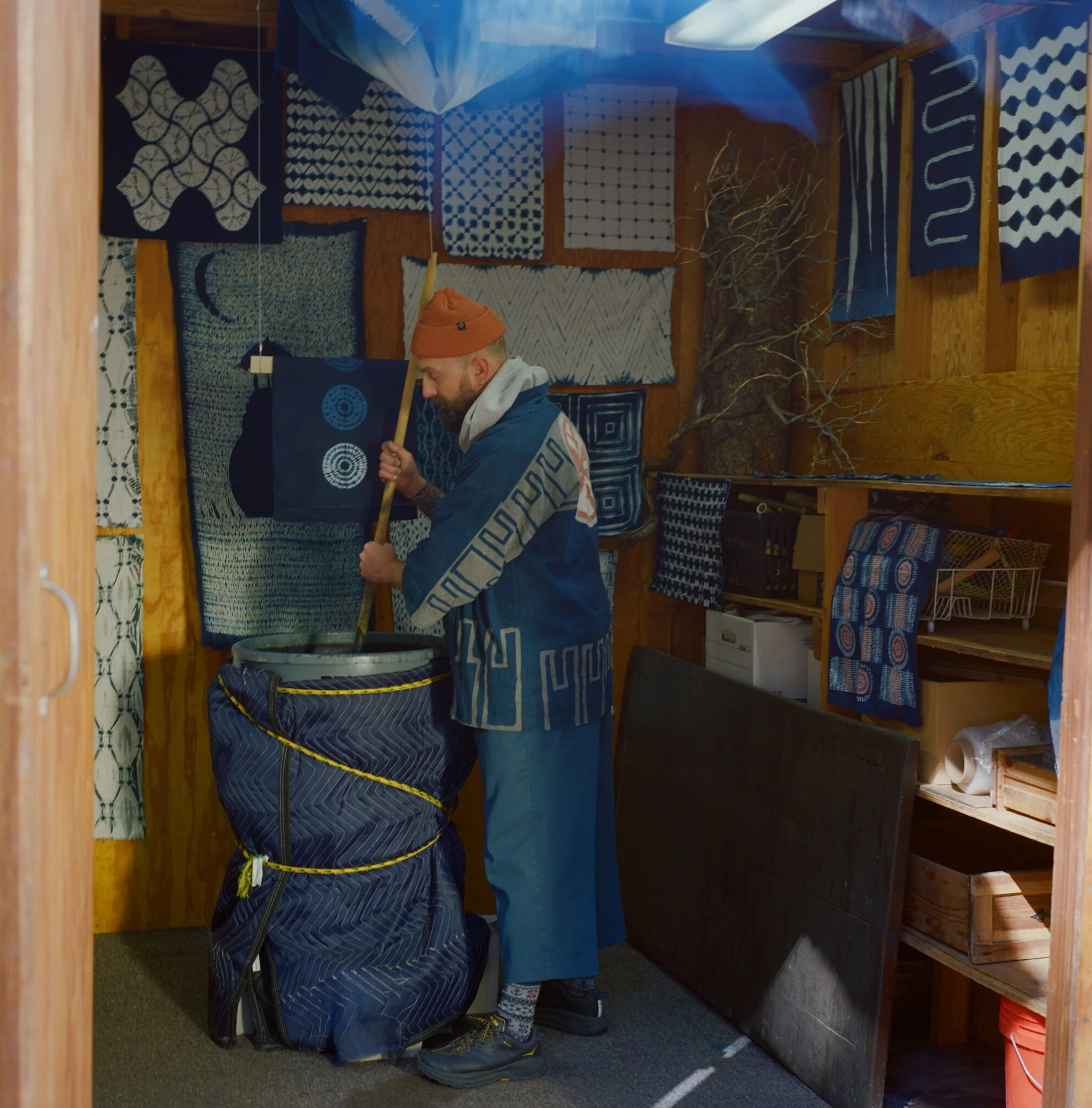
Explore the Kawari Mokume Technique (変わり木目), a contemporary variation of traditional Mokume Shibori, the Japanese “wood grain” stitch-resist dyeing method. Kawari Mokume translates to “random” or “varied wood grain,” embracing a more organic, freeform approach to pattern-making.
While traditional Mokume is known for its precision and repetition, Kawari Mokume introduces variation in stitch placement and movement, resulting in flowing, irregular designs reminiscent of natural wood grain and forest textures. This stitch-resist technique is simple in process yet produces sophisticated, modern patterns—each piece uniquely shaped by the maker’s hand.
In this hands-on workshop, you’ll:
Learn to create organic Kawari Mokume patterns using simple stitch-resist techniques
Dye your piece with natural indigo
Take home your very own Japanese indigo tea towel
All materials are provided.
Light lunch and snacks will be available on a donation basis.
Length: Approx. 4 hours
Instructor:
Adrian Lubanski, founder of Indigo Inari, studied Traditional Japanese Textile Design in Japan for five years and now teaches both there and at Anda. He has also worked as a costumer on films such as Once Upon a Time in Hollywood, Licorice Pizza, Babylon, and A Star is Born.
Dedicated to preserving traditional Japanese textile arts, Adrian brings both technical depth and a contemporary perspective to his teaching, making these historic methods accessible and relevant today.
A Note on Tradition
Kawari Mokume Shibori is an advanced stitch-resist technique rooted in Mokume Shibori. While traditional Mokume emphasizes evenly spaced, parallel rows of stitching to achieve a consistent wood grain effect, Kawari Mokume embraces variation—allowing stitches to shift, curve, and evolve across the fabric. This approach creates patterns that feel more natural and spontaneous, reflecting the irregular beauty of organic forms.
Refund Policy:
Refunds are available if you cancel at least 7 days before the event. After that, refunds or credits are not available.
Date: Saturday, May 30th, 2026
Time: 10:00 AM – 3:00 PM
Location: Mt. Washington, Los Angeles
Explore the Kawari Mokume Technique (変わり木目), a contemporary variation of traditional Mokume Shibori, the Japanese “wood grain” stitch-resist dyeing method. Kawari Mokume translates to “random” or “varied wood grain,” embracing a more organic, freeform approach to pattern-making.
While traditional Mokume is known for its precision and repetition, Kawari Mokume introduces variation in stitch placement and movement, resulting in flowing, irregular designs reminiscent of natural wood grain and forest textures. This stitch-resist technique is simple in process yet produces sophisticated, modern patterns—each piece uniquely shaped by the maker’s hand.
In this hands-on workshop, you’ll:
Learn to create organic Kawari Mokume patterns using simple stitch-resist techniques
Dye your piece with natural indigo
Take home your very own Japanese indigo tea towel
All materials are provided.
Light lunch and snacks will be available on a donation basis.
Length: Approx. 4 hours
Instructor:
Adrian Lubanski, founder of Indigo Inari, studied Traditional Japanese Textile Design in Japan for five years and now teaches both there and at Anda. He has also worked as a costumer on films such as Once Upon a Time in Hollywood, Licorice Pizza, Babylon, and A Star is Born.
Dedicated to preserving traditional Japanese textile arts, Adrian brings both technical depth and a contemporary perspective to his teaching, making these historic methods accessible and relevant today.
A Note on Tradition
Kawari Mokume Shibori is an advanced stitch-resist technique rooted in Mokume Shibori. While traditional Mokume emphasizes evenly spaced, parallel rows of stitching to achieve a consistent wood grain effect, Kawari Mokume embraces variation—allowing stitches to shift, curve, and evolve across the fabric. This approach creates patterns that feel more natural and spontaneous, reflecting the irregular beauty of organic forms.
Refund Policy:
Refunds are available if you cancel at least 7 days before the event. After that, refunds or credits are not available.