
Active Child: Bridging Past and Present, Feelings and Memory Through Music
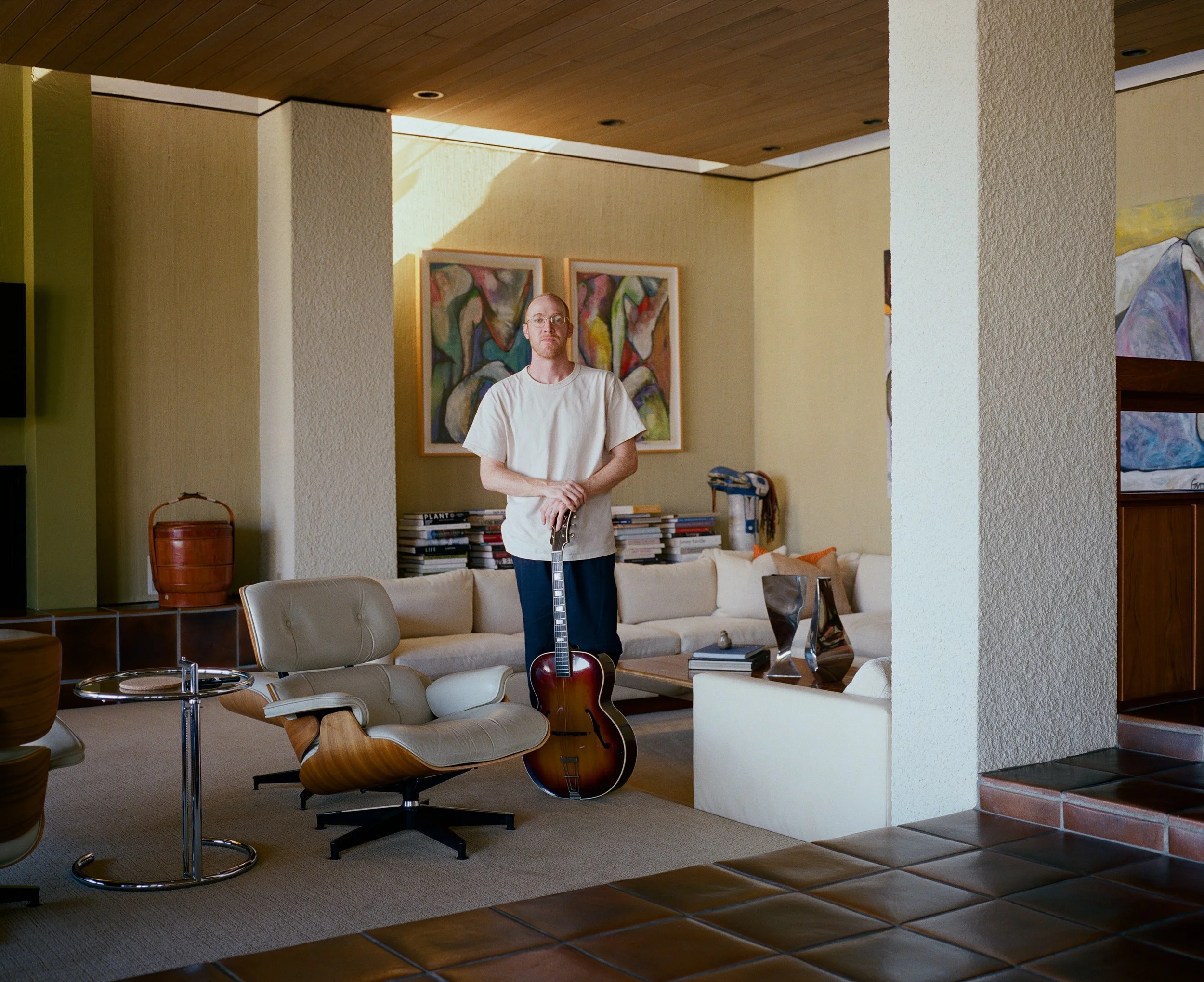
When you were a kid, what did you want to be when you grew up?
I wanted to be a marine biologist. I've come to realize there was a wave of kids in the 90's who had this same dream job due to us all becoming obsessed with the movie Free Willy. Orcas are my favorite animals to this day.
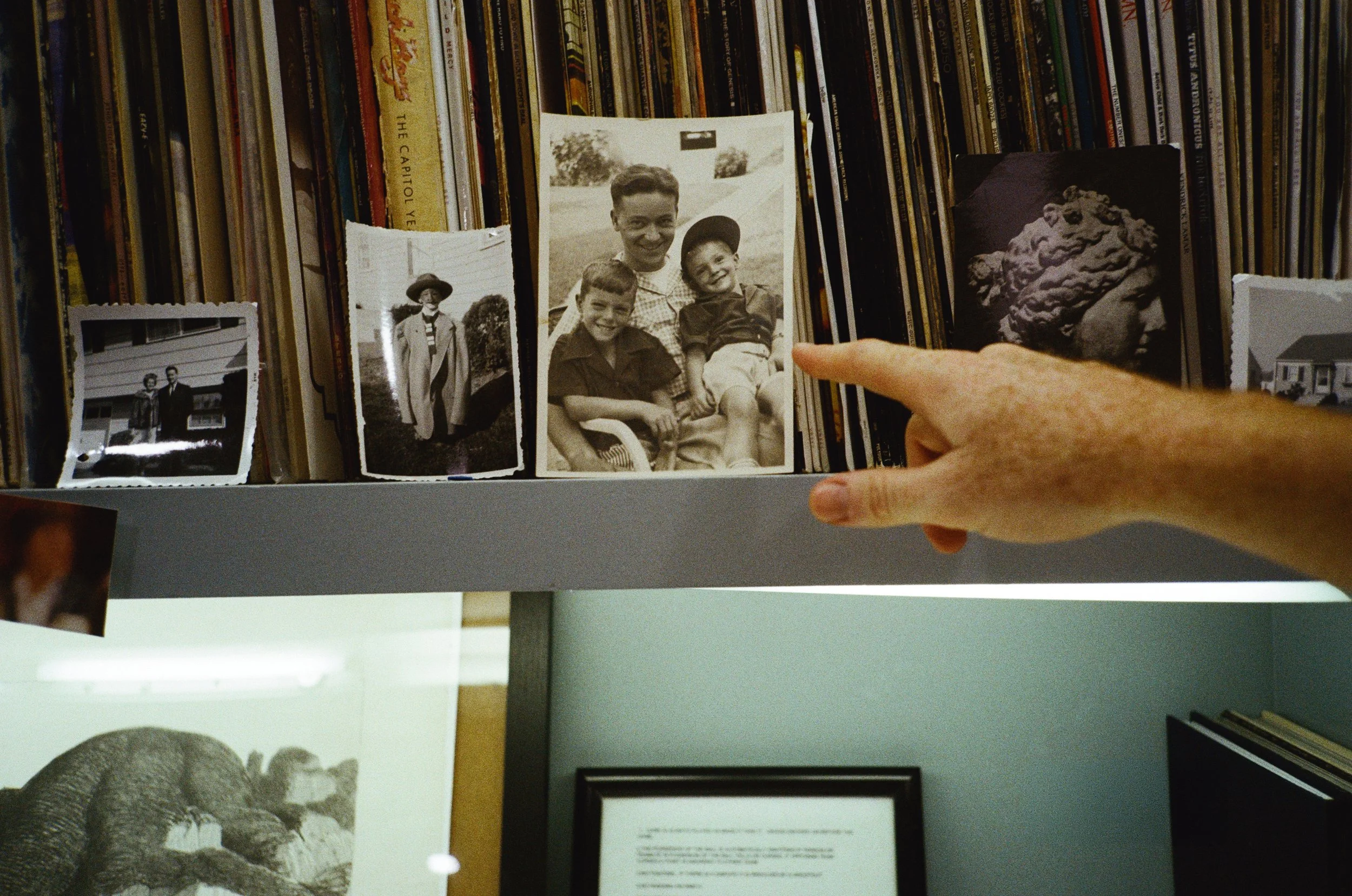
Active Child points to a photograph of his father, pictured on the left as a young boy sitting on his grandfather’s lap. Family photographs like these fill his studio, keeping him connected to the people and stories that came before him - a living connection to his roots that continues to shape his present and his work as an artist.
“It's been the encouragement of people in my life that has led me to where I am now.”
Before you identified as a musician, who were you? What was your personality like, and what kind of environment - emotionally and creatively - shaped your curiosity and early exploration of music and other interests?
This is a good question. So much of my identity now is wrapped up in music. And although music has more or less always been a part of my life I never really looked at myself that way until I was in college. As a kid, choir was my first musical aha moment. I was a quiet but inquisitive kid. College was the first time I found myself surrounded by other people who were pursuing music creatively. It got me curious about trying it myself and eventually led to my first recordings. It's been the encouragement of people in my life that has led me to where I am now.
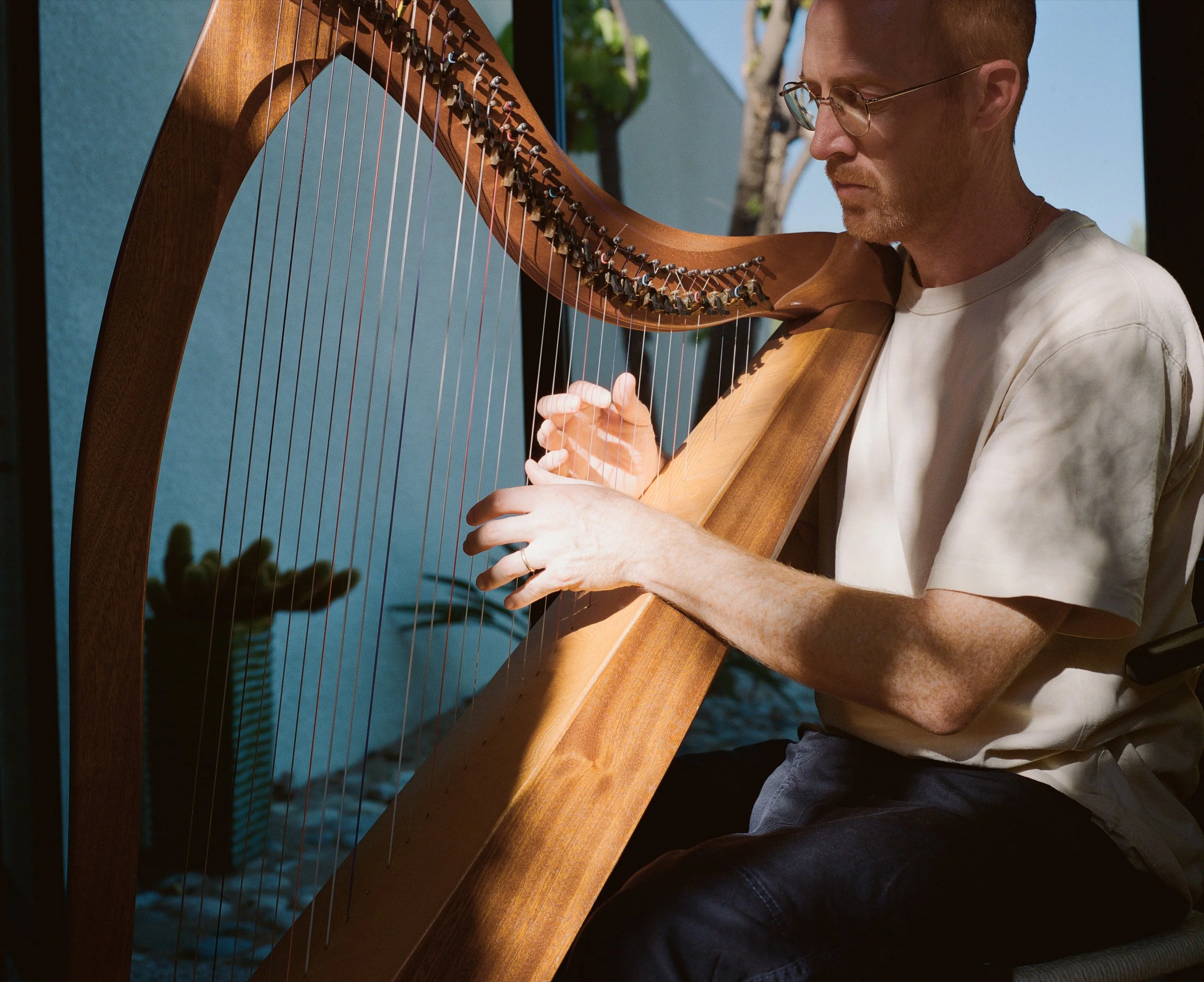
What’s your earliest memory of connecting with an instrument? How did the harp come into your life?
I'd say it was my first time singing in the Philly Boys Choir. A hundred voices in harmony is a profound instrument and one that has influenced my musical senses to this day.
Harp came into my life in a very happenstance way. I visited a music shop in Denver where I was living at the time. My friend was returning an instrument he had rented and I tagged along. The front room of the shop was filled with harps. I just walked in and casually started strumming one of them. The owner of the shop came in and said, if you'd like you can take that home today it's yours. I laughed it off a bit confused, saying no I have no idea what I would do with it and left. The next day I came back and left with the harp, which pretty much changed the trajectory of my life for the next 20 years.
“A hundred voices in harmony is a profound instrument and one that has influenced my musical senses to this day.”
When did music shift from something you loved to something you had to pursue? Looking back on your early journey to signing with a major label, what moment still stands out to you?
I think it was when I had my first offer to release a song in physical form. First I released a tape and then 7" vinyl and both sold out quickly. That was a major wake up call.
I also had friends around encouraging me to release the music in some official form. Up until then it was more just a creative hobby, something I would do like painting or drawing which had been my creative outlets up until that point.
A stand out moment happened in Norman, Oklahoma pretty early on. I was on tour and there was a girl in the front row singing all of the lyrics. I couldn't believe it. She was in tears, in some small venue in Norman, Oklahoma. I think maybe I should write a song about her.
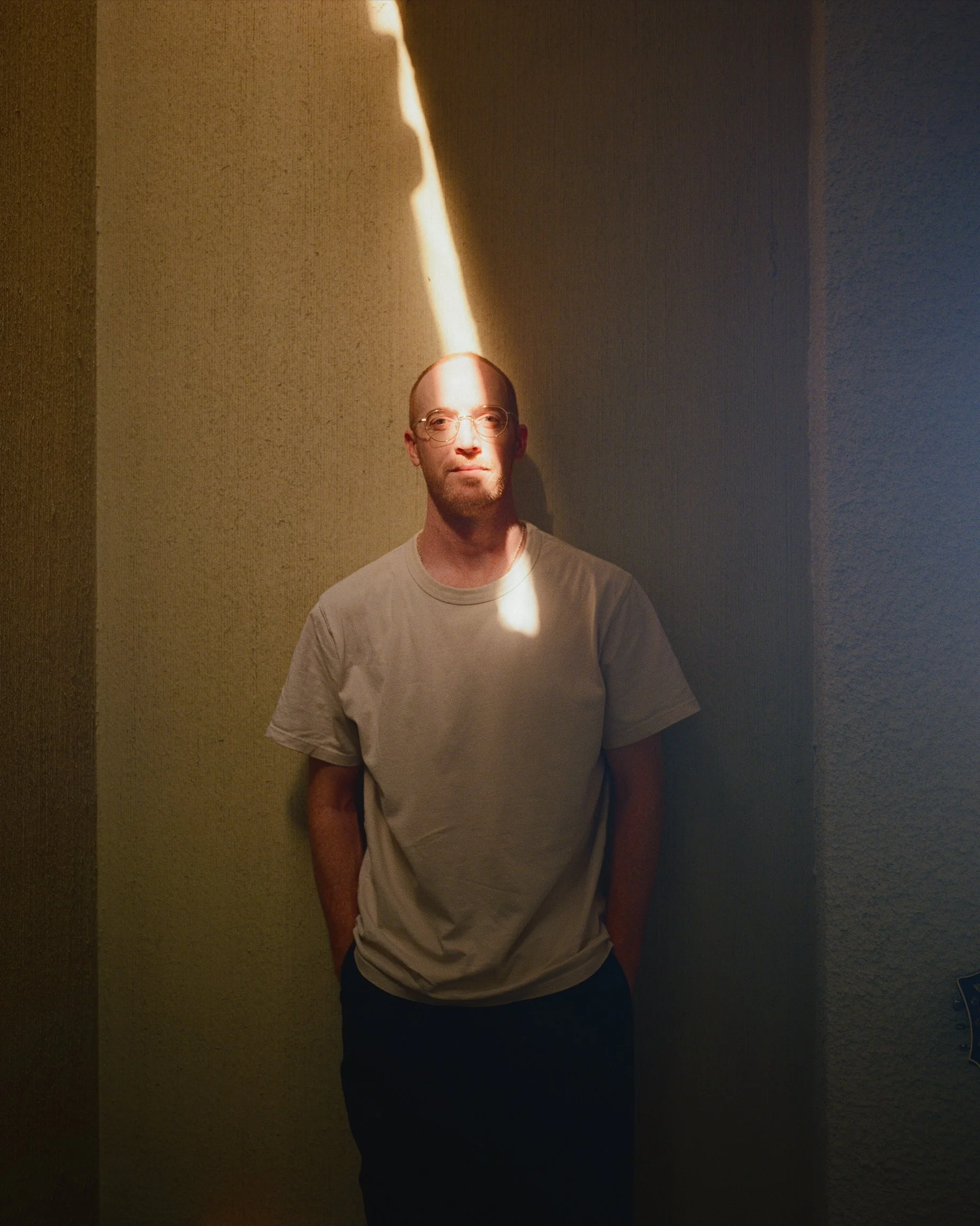
“Be less precious with your work. Trust your intuition if something feels right and think less about its reception.”
If you could give your younger self one piece of creative advice and ignore one piece - what would they be?
Be less precious with your work. Trust your intuition if something feels right and think less about its reception.
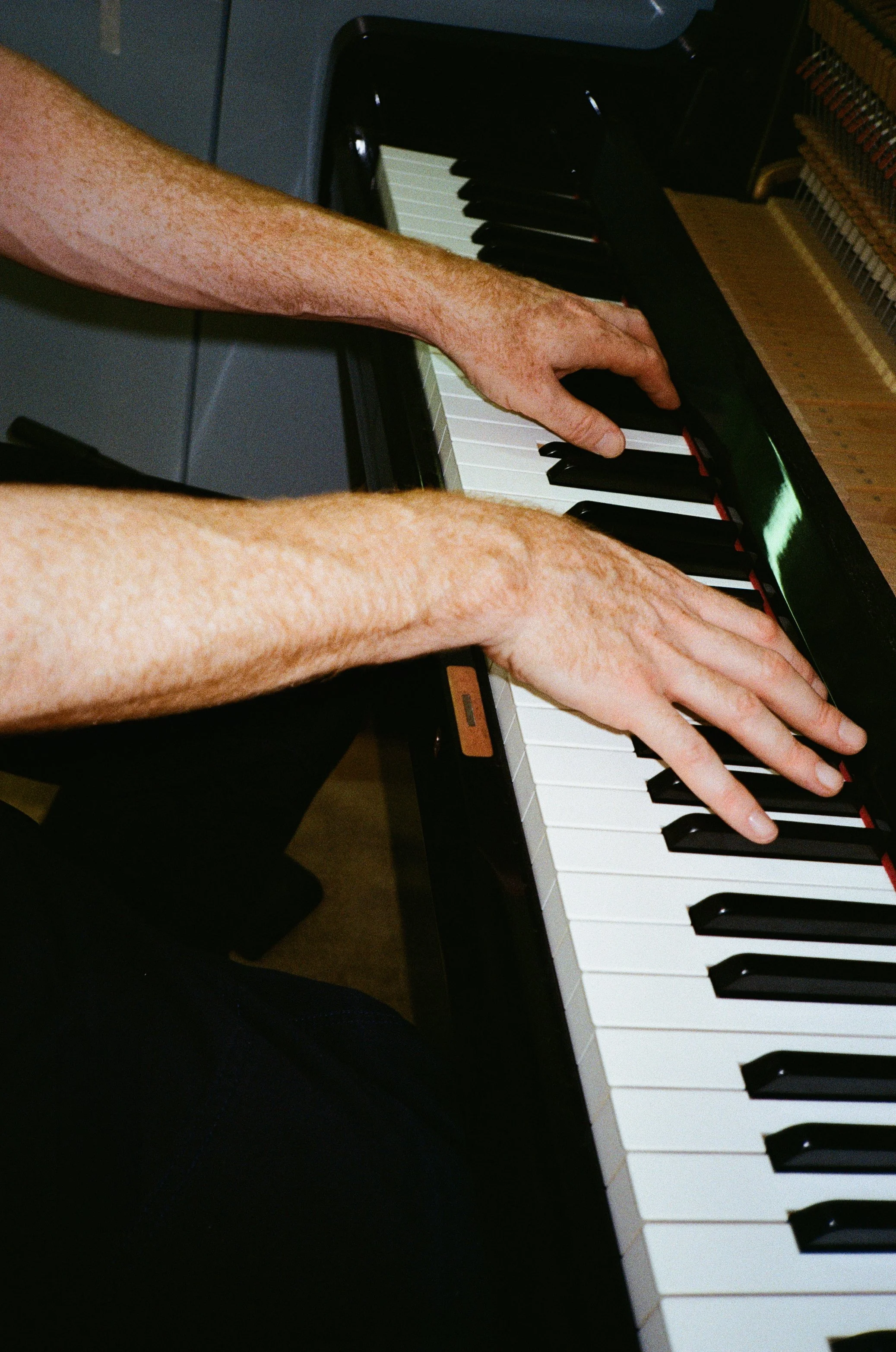
Where do songs usually begin for you today? What most often sparks a new idea - an emotion, a sound, a moment from daily life - and how do you capture inspiration when it arrives?
Songs start either from an idea in my head or sitting down with an instrument. The song almost always comes from an instrumental idea I've already started. I record everything from the start, capturing that initial excitement is key to locking in the idea. Also working through that initial idea quickly is important to capture its truest form.
“I'm just trying to feel something, I want to really be absolutely brimming with emotion. That's my only goal, it's that rush of endorphins that the right combination of notes, melody and lyric can produce.”
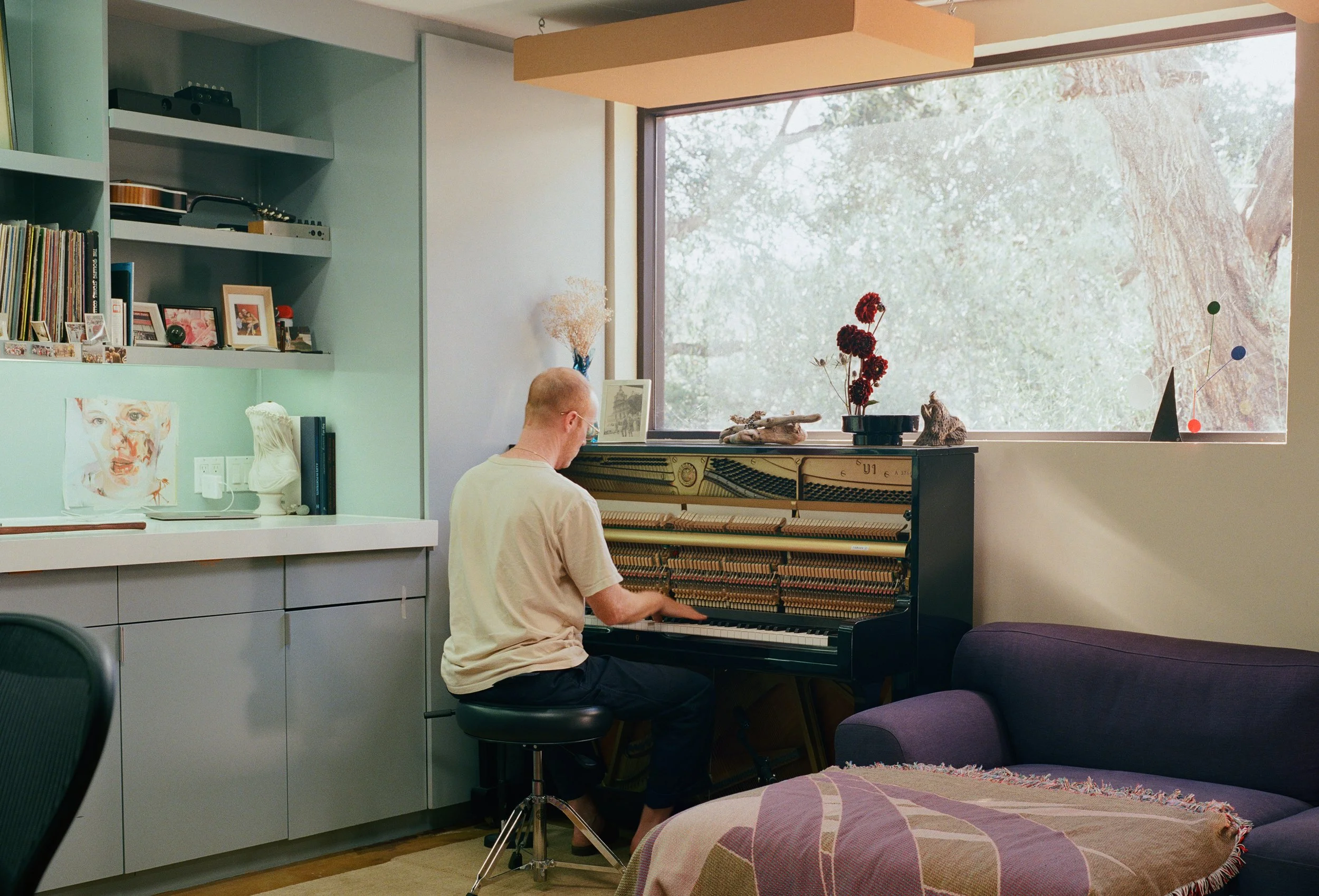
Active Child at the piano in his studio, with a giant tree perfectly framed outside the window — a quiet moment where music and nature meet.
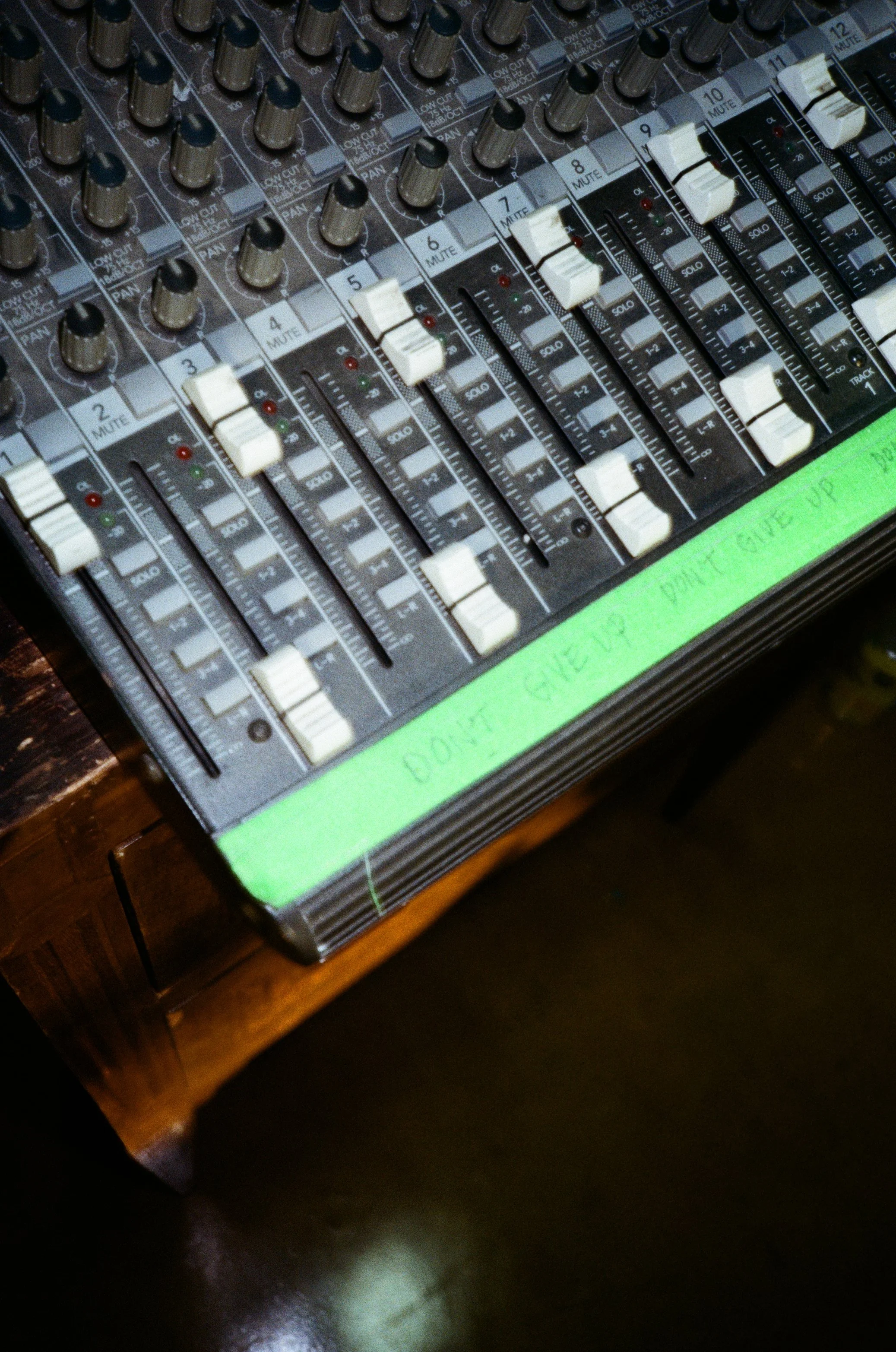
A message taped to Active Child's analog audio mixer “DON’T GIVE UP” - a reminder to keep pushing through the creative blocks.
Your voice carries both fragility and strength. When you write, are you trying to understand your feelings, release them, or simply tell a story?
I'm just trying to feel something, I want to really be absolutely brimming with emotion. That's my only goal, it's that rush of endorphins that the right combination of notes, melody and lyric can produce.
How do you know when a song is finished? What does that moment feel like, and has your sense of “done” changed with experience?
When I'm working I'm constantly starting the idea from the beginning and working my way through it, adjusting as I listen to things that need lifting or sculpting. When I can listen from start to finish and not stop to adjust anything it's done.
“Sometimes pressure can create blocks for me. Working with collaborators and other producers has been a huge help in navigating these periods so that I know where I stand.”
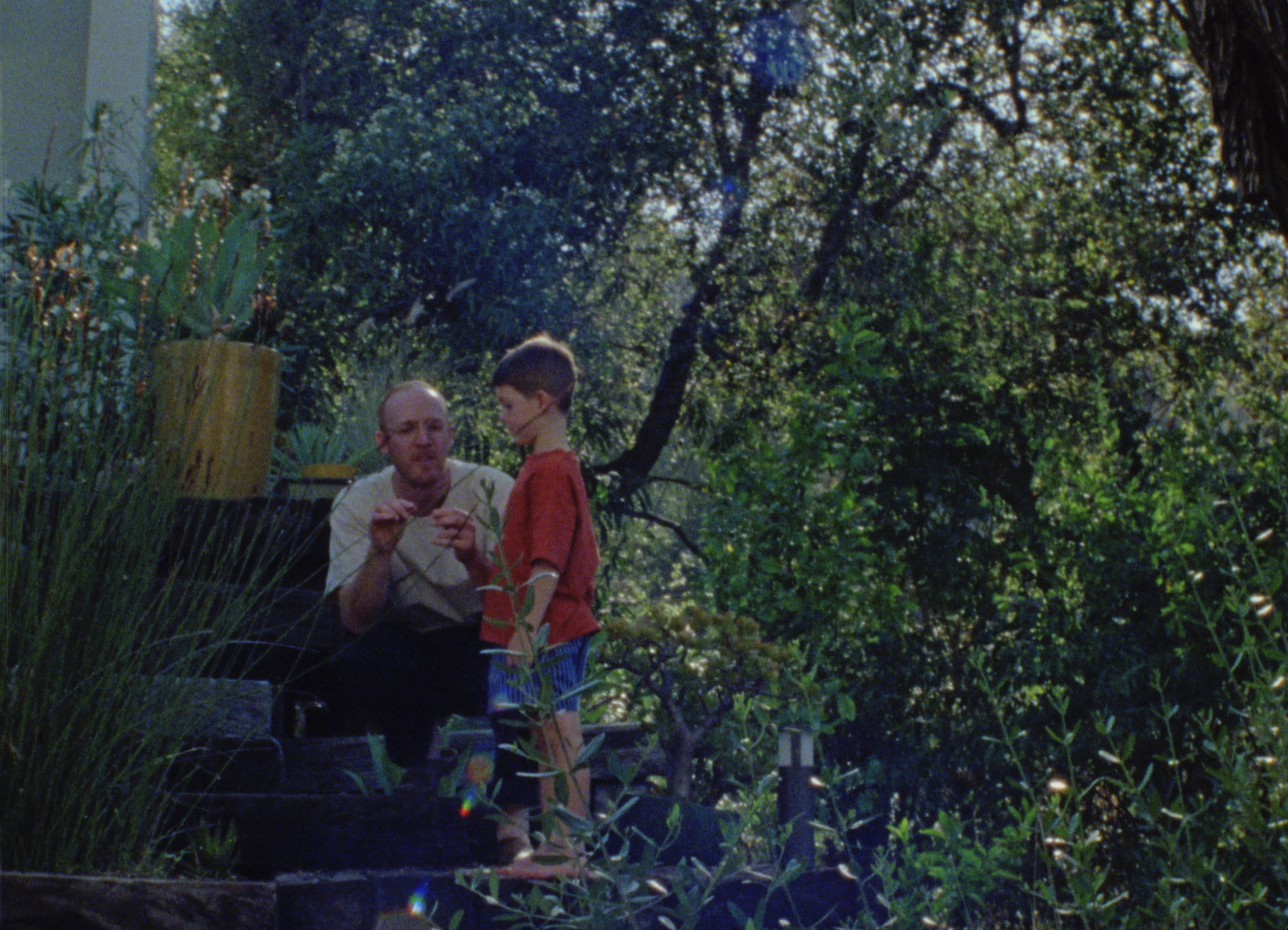
Active Child sharing a quiet moment with his son, Auggie at his family home in Pasadena - a glimpse of life beyond the stage and the music.
What is your relationship with the creative process? When you’re in it, does it ever feel heavy or challenging, or is it more often a place of play and exploration? How do you manage creative blocks?
More often it's play and exploration. But over time that feeling usually gets interrupted by either boredom with the idea or pressure to deliver something. Sometimes this pressure can create blocks for me. Working with collaborators and other producers has been a huge help in navigating these periods so that I know where I stand. Working solo is my preference but the power of collaboration is crucial as well.
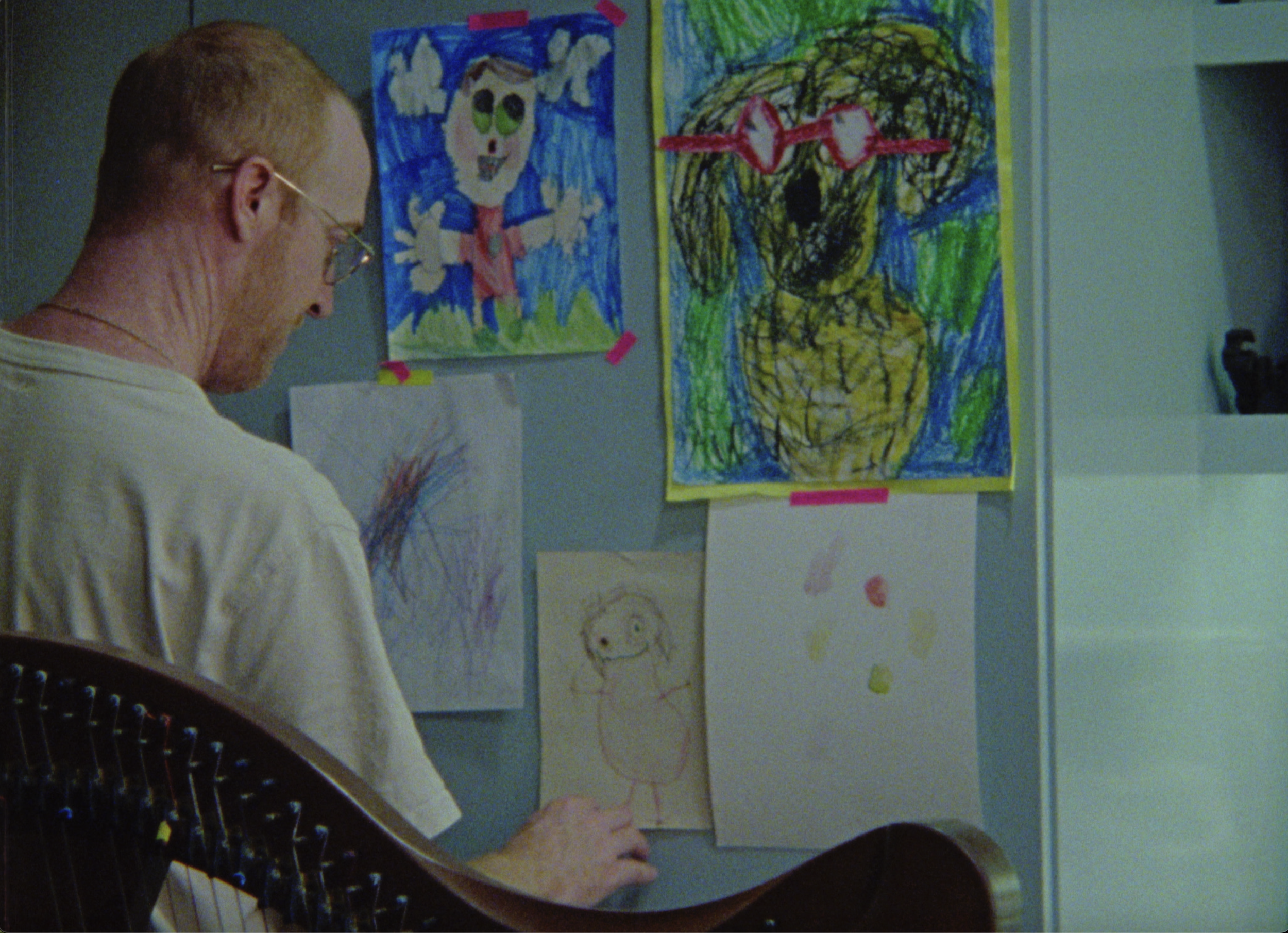
Active Child arranging his children’s drawings on the walls of his studio bringing a little bit of home into his creative space.
You are a father now, with two lovely children and a wonderful wife. Parenthood is often described as a kind of expansion - of love, responsibility, and time - but it can also be a narrowing, asking for presence in ways that leave little room for solitude. Days become fuller. Quiet moments, more precious. For artists, that shift can feel especially complex: sometimes leading to deeper social and creative solitude, and at other times to a surprising productivity. Some become more efficient and can't help but wonder what they once did with all the time they had before children. What has that shift actually looked like for you?
I can't say it's made me more efficient unfortunately but it has created a stronger drive inside me to buckle down and focus. I spend a lot more time working at night now which I never did in the past. And interestingly that change in work atmosphere has changed my work dramatically.
“Night time is my time now. The day for me is usually spent reviewing what I've started the nights before and refining it. Then I come back at night and start new ideas. ”
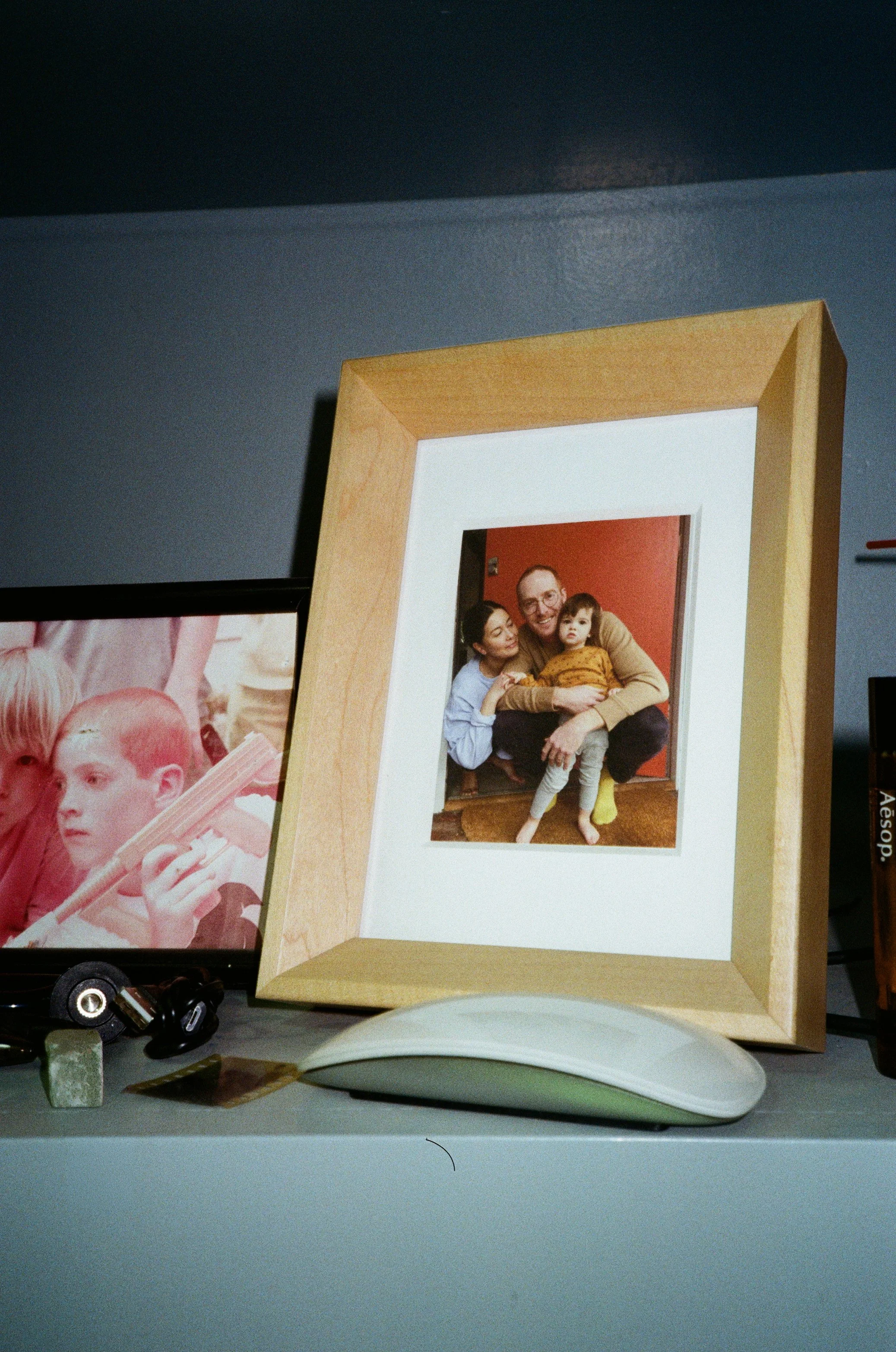
A childhood photograph of himself - past and present, side by side.
What does a typical day look like for you, and how do you carve out time for focus and creativity? Is there a small ritual, corner of the house, or time of day that helps you stay productive?
Night time is my time now. The day for me is usually spent reviewing what I've started the nights before and refining it. Then I come back at night and start new ideas. I find it more difficult now to lock in during the day because by the time I'm in a groove it's time to go pick up the kids from school.
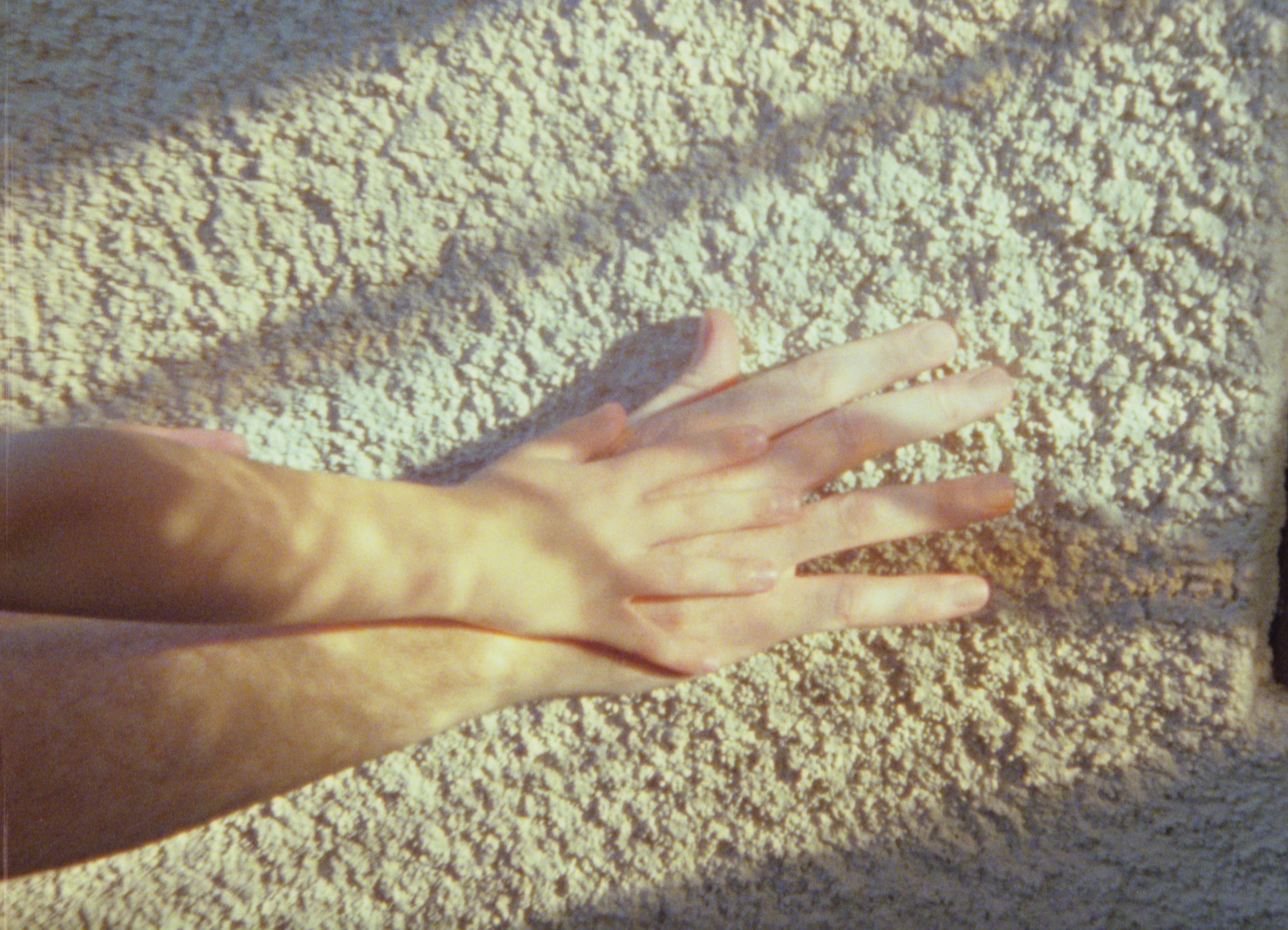
The hands of Active Child and his son, Auggie, reflected through stained glass at his parents’ home.
You recently released your self-titled album, Active Child, after five years, along with the single “Coming Up,” which I absolutely love and really resonated with me. Now that the album is out in the world, looking back on the process, where did this record come from emotionally or creatively? Was there a particular moment, feeling, or experience that shaped the album as a whole?
“ I'm doing my best I think to hold a mirror up to not just my life but our shared experience. It's become about diving into the turmoil of humanity and all the beauty and horror that comes with it.”
I'm still making sense of this new album. I'm doing my best I think to hold a mirror up to not just my life but our shared experience. It's become about diving into the turmoil of humanity and all the beauty and horror that comes with it. I want to know, appreciate, and understand everything that we're experiencing. Music has become my way of exploring it all.
I take a lot of voice notes on my phone now when something strikes me in the moment at home, or on a hike with my family. Sometimes I'll incorporate those recordings into the fabric of the music to add a layer of emotion for myself. Many times I'm stacking these emotional experiences inside a recording in an attempt to elicit a response from myself.
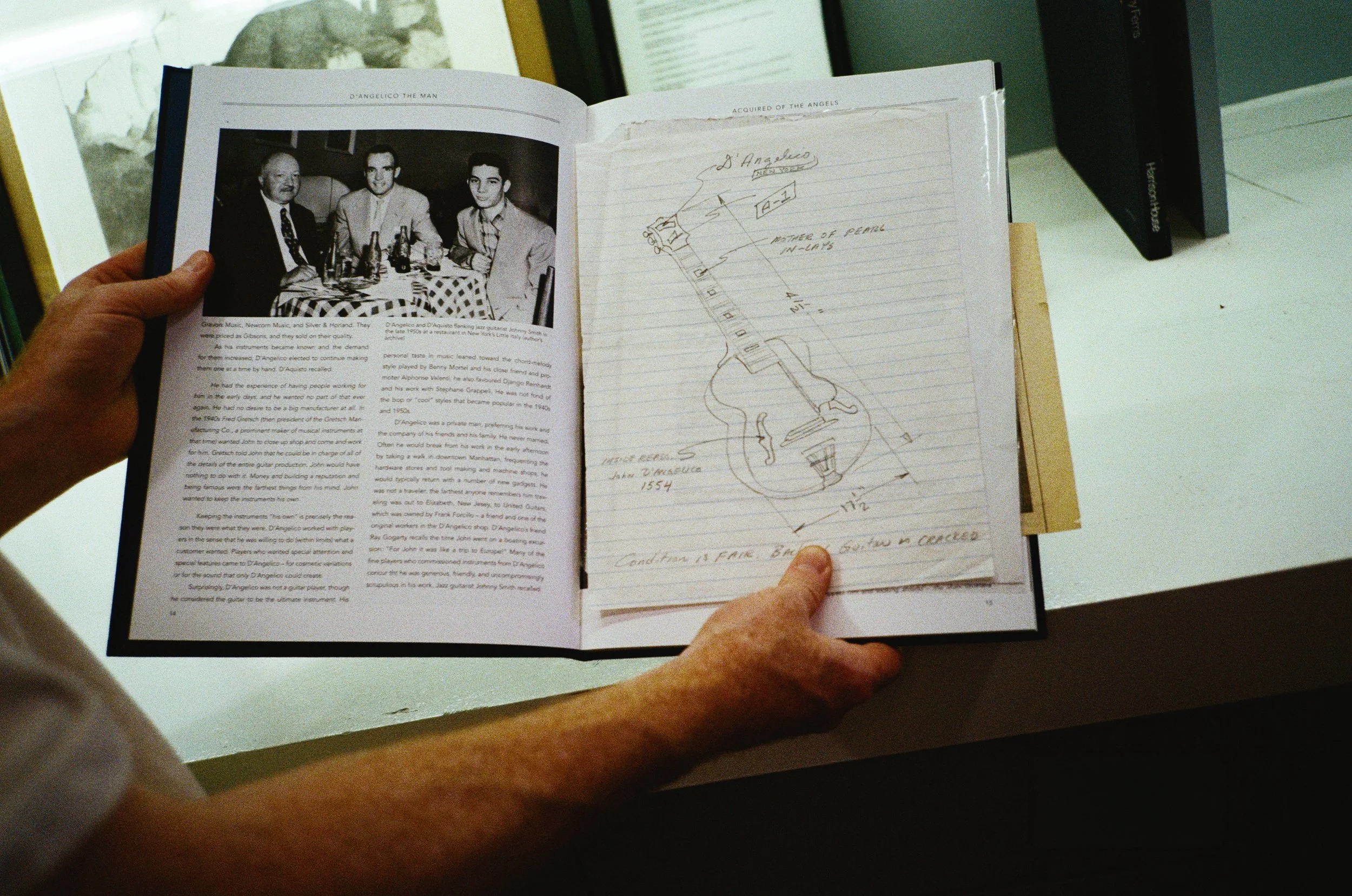
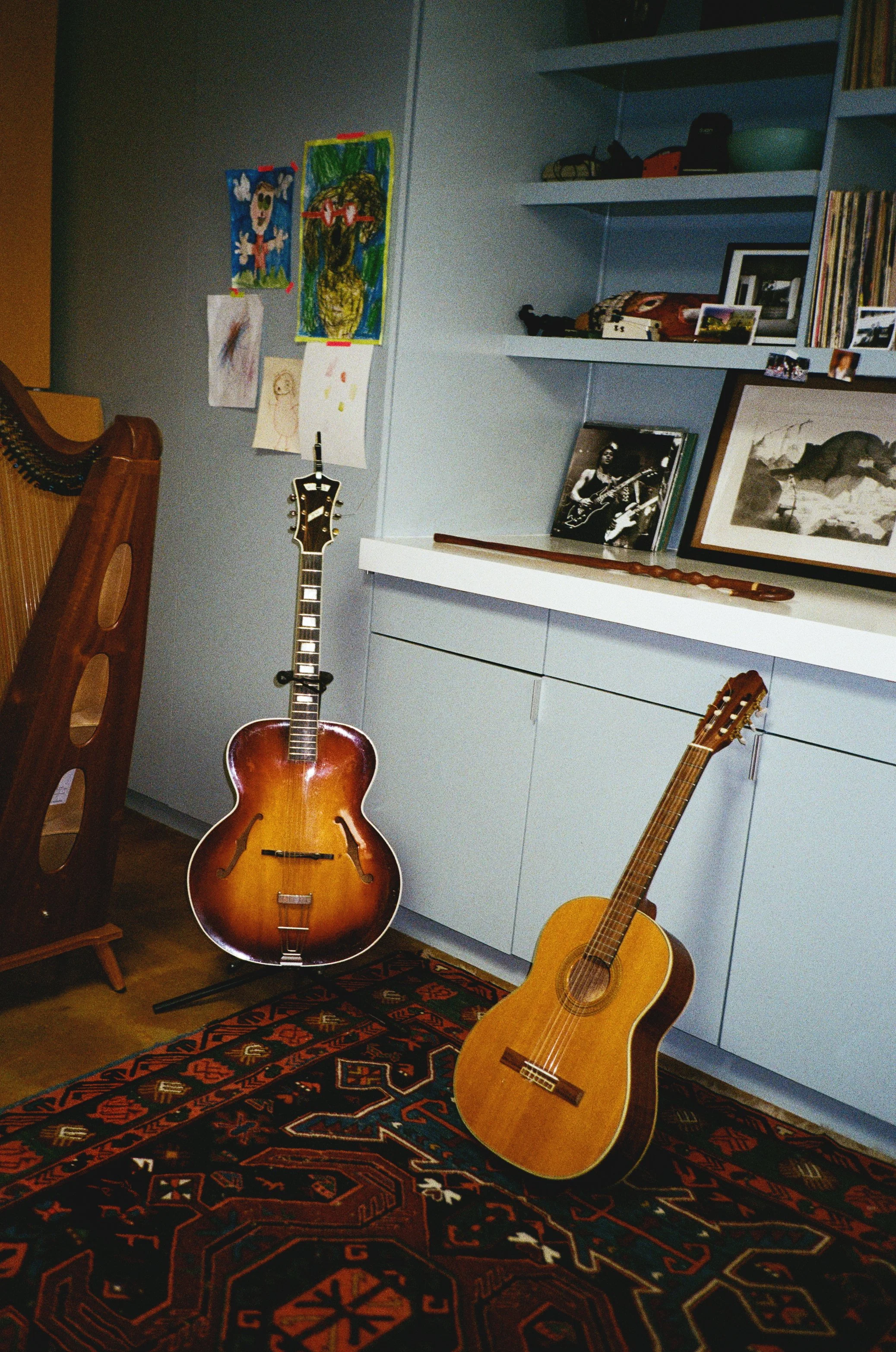
Active Child with drawings of the guitar he played on his self-titled new album, Active Child. The guitar originally belonged to his great-grandfather on his mother’s side and was eventually passed down to him by his grandmother. A family heirloom carried through generations, now entering a new chapter in its musical history.
“Real instruments became the glue of this record for me. I was really yearning for a more organic sound this time around. Maybe it's a reflection of fatherhood. I was drawn more towards the imperfections and air that come from live recordings.”
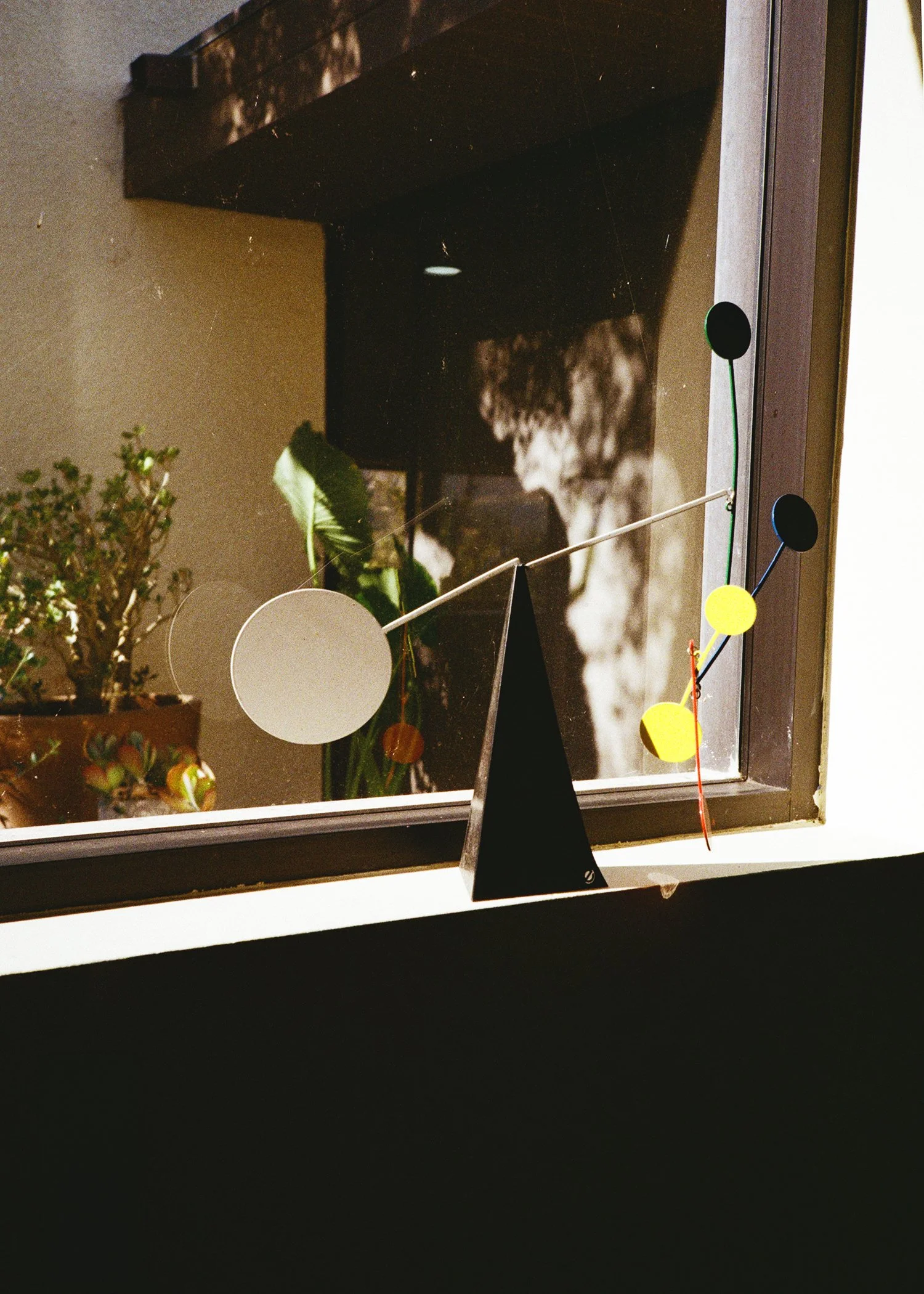
When you make music, how do real instruments and technology come together in your work? With AI and new tools becoming part of the creative landscape, how do you approach them as an artist? Do they feel like a tool, a challenge, or something else entirely?
I haven't explored AI tools yet in my process, but it's something I'm curious about. Real instruments became the glue of this record for me. I was really yearning for a more organic sound this time around. Maybe it's a reflection of fatherhood. I was drawn more towards the imperfections and air that come from live recordings.
Your music feels very cinematic and visual. How do you think about imagery - album covers, videos, and the visual world around a record? Do images appear while you’re making music, or do they emerge after the songs have taken shape?
The visual world is very important to me, my studio is filled with images, postcards, photos, artwork, random things I've collected over the years. And I find that there are no two art forms more connected than film and music. Notes, chords, melody, lyric are all in a single shot in a film. I love film because it has the same power over my emotions that music does.
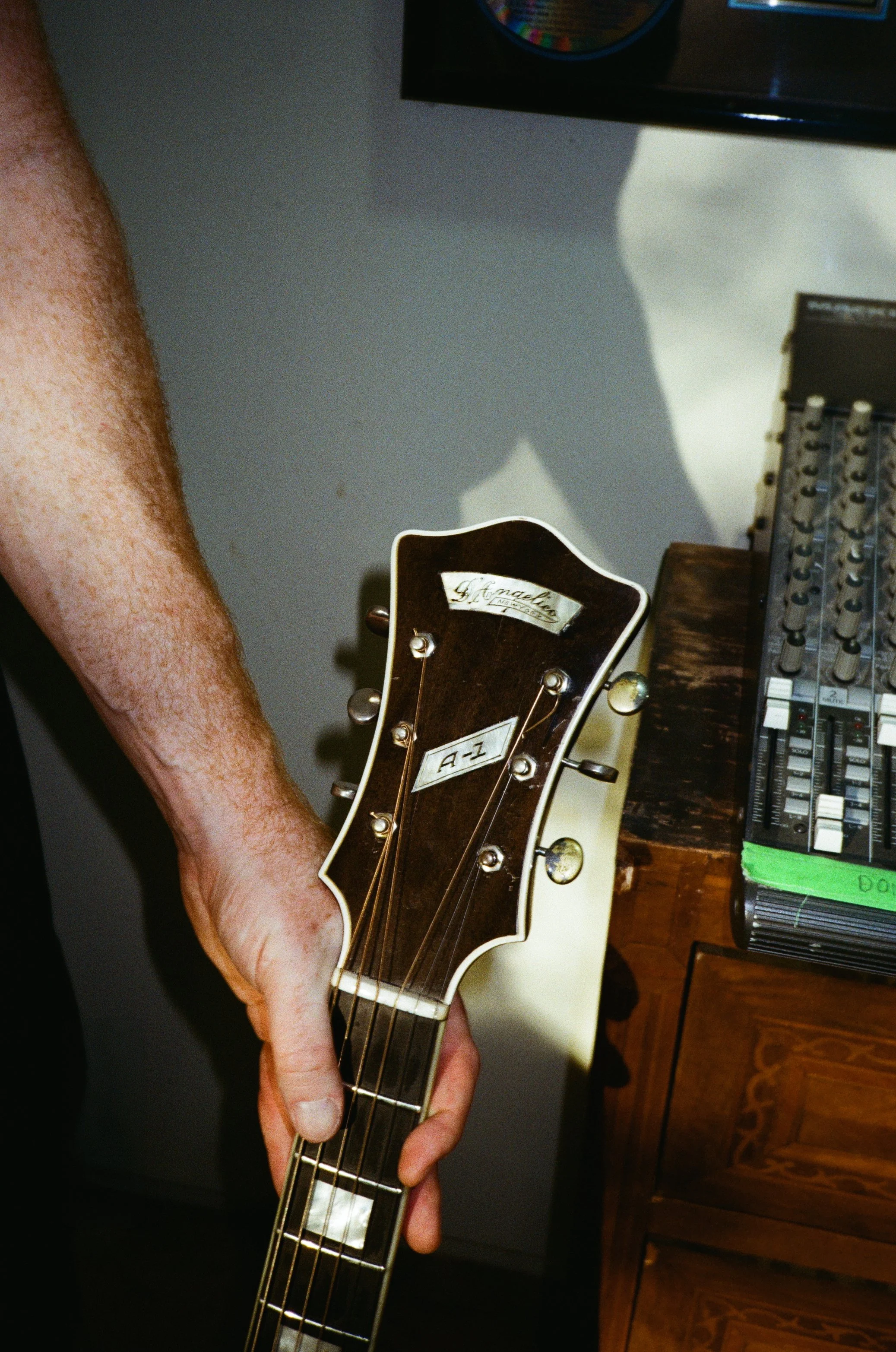
A D’Angelico guitar passed down to Pat Grossi, aka Active Child, from his great-grandfather - a family heirloom that he also played on his latest self-titled album, Active Child
Are there books, artworks, philosophies, or ideas - musical or otherwise - that have deeply shaped the way you think, create, and exist?
After college I moved to Denver and got my first apartment. I loved that place so much. I recorded my first songs there on a little cassette recorder. One day a neighbor had a garage sale on the sidewalk and I bought this giant old book about DaVinci; his life, his art, his inventions, everything. It was such a revelation to me because we all grow up knowing the greats like Leonardo, but I was so inspired by the way his curiosity for all things blended together into one long exploration of the world through his mind and work. It showed me a path forward where all my own curiosities could be explored if I wanted. For now music has been a way for me to express those curiosities.
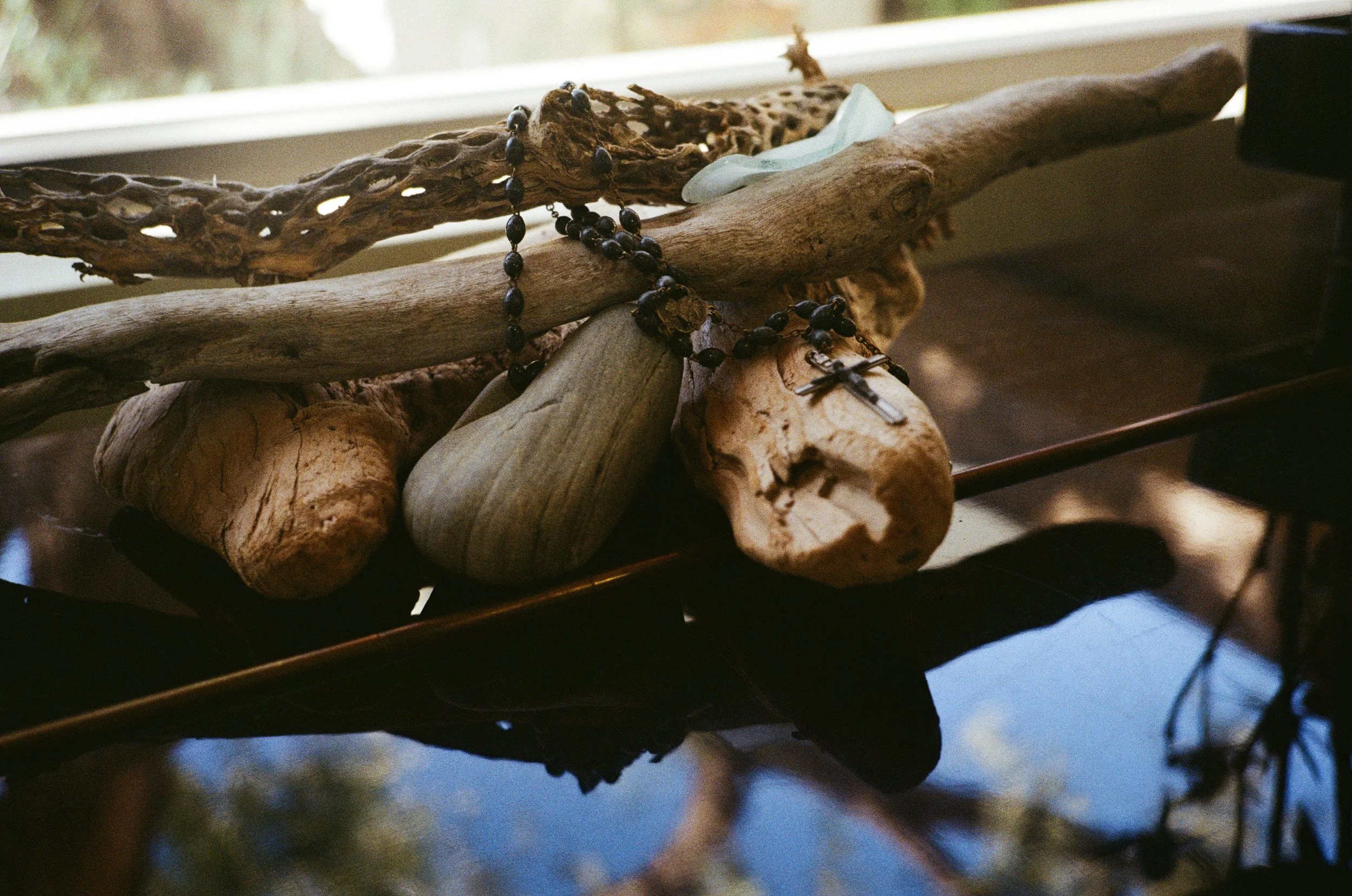
Found objects and personal tokens - driftwood, stone, cholla cactus wood, and a crucifix rosary rests on the gloss surface of the studio piano, reflecting a blend of organic textures and spiritual motifs.
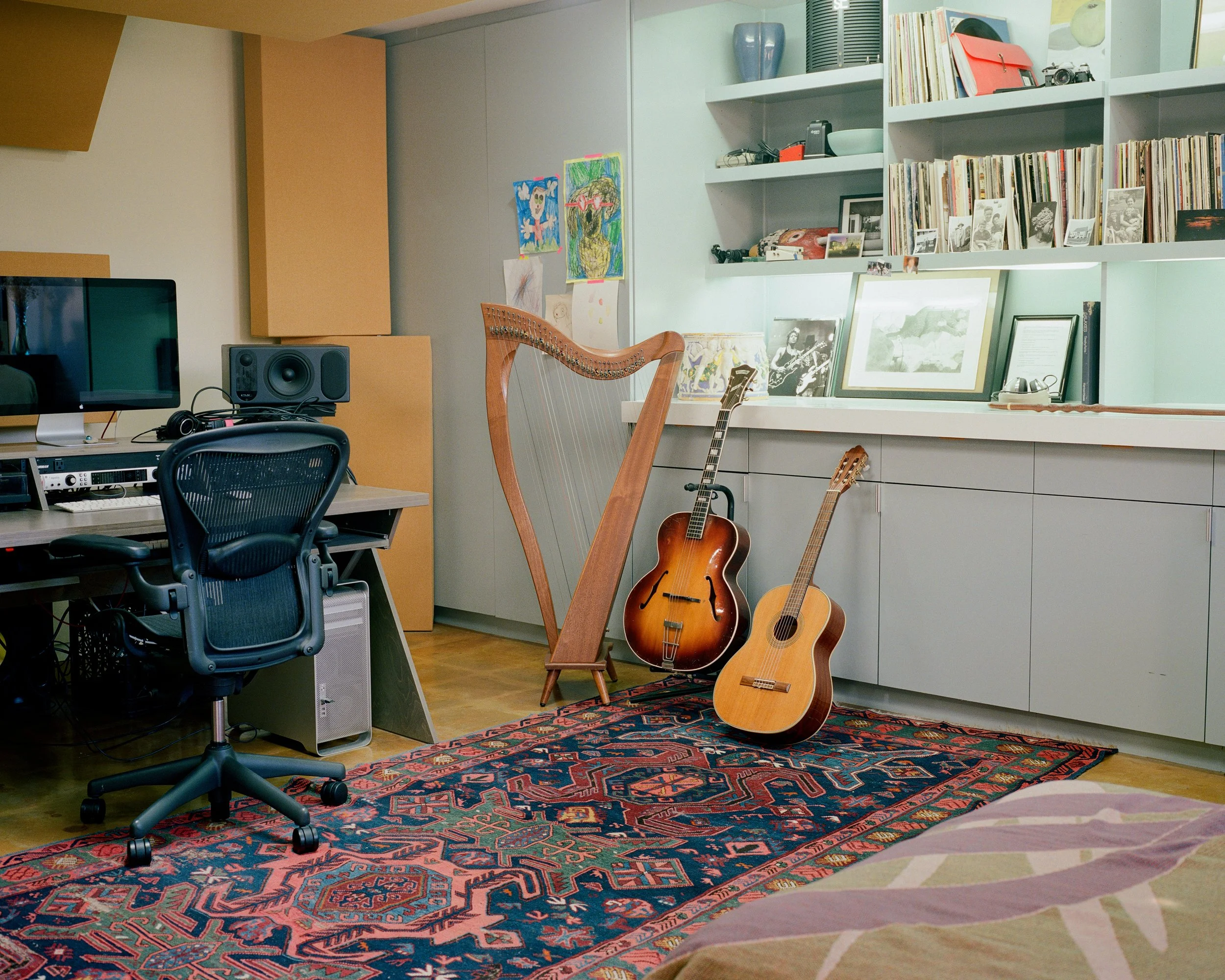
Active Child’s Studio in Pasadena, Los Angeles
"For me it's about continuing to stay open…I don't want to grow old and stuck in the art, music, films, politics of my youth.”
Alongside family and music, what feels most important to you in life?
For me it's about continuing to stay open. Open in the sense that I want my mind to remain as spongy as possible, I don't want to grow old and stuck in the art, music, films, politics of my youth. That, and plants, I love plants and working in my garden.
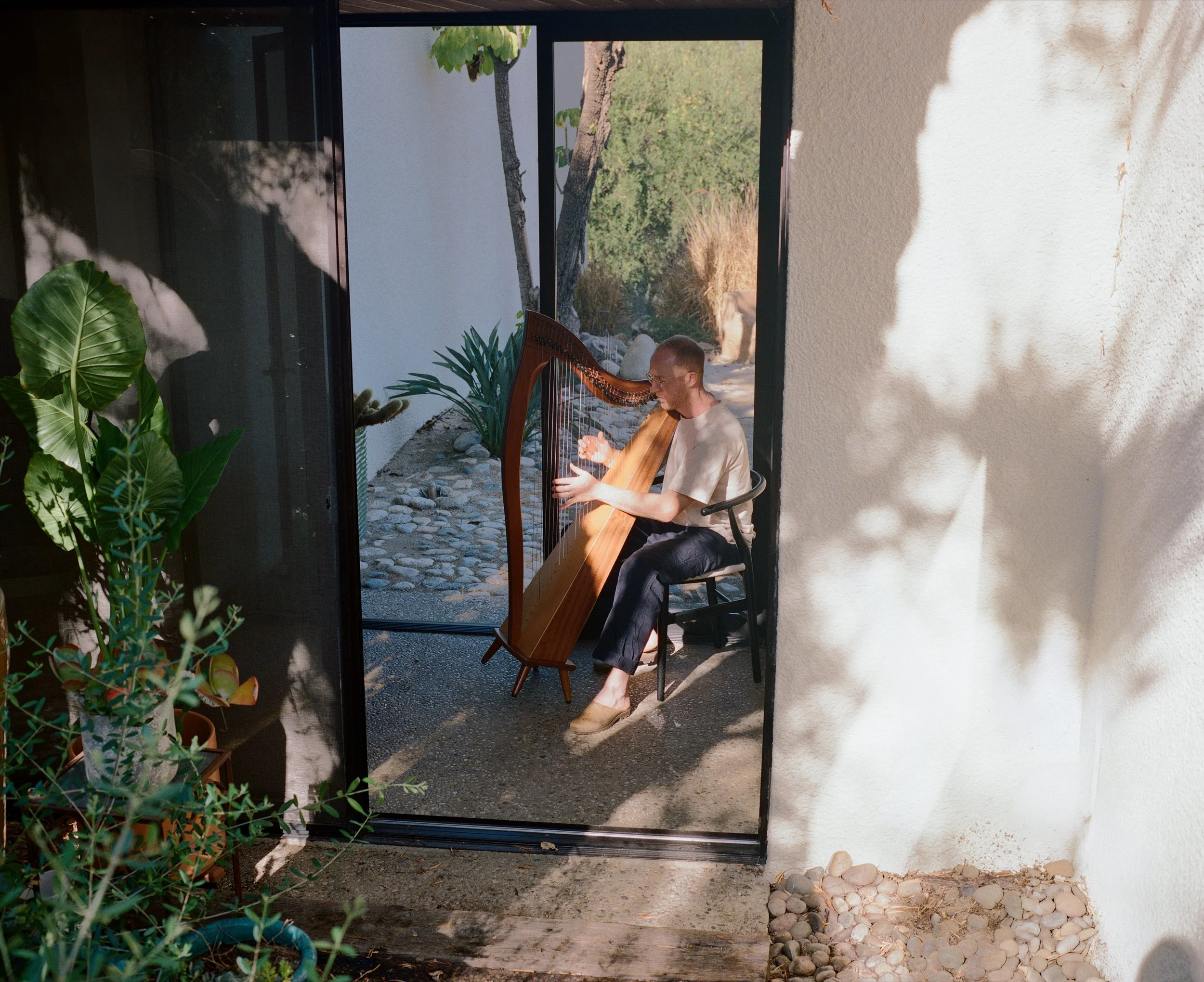
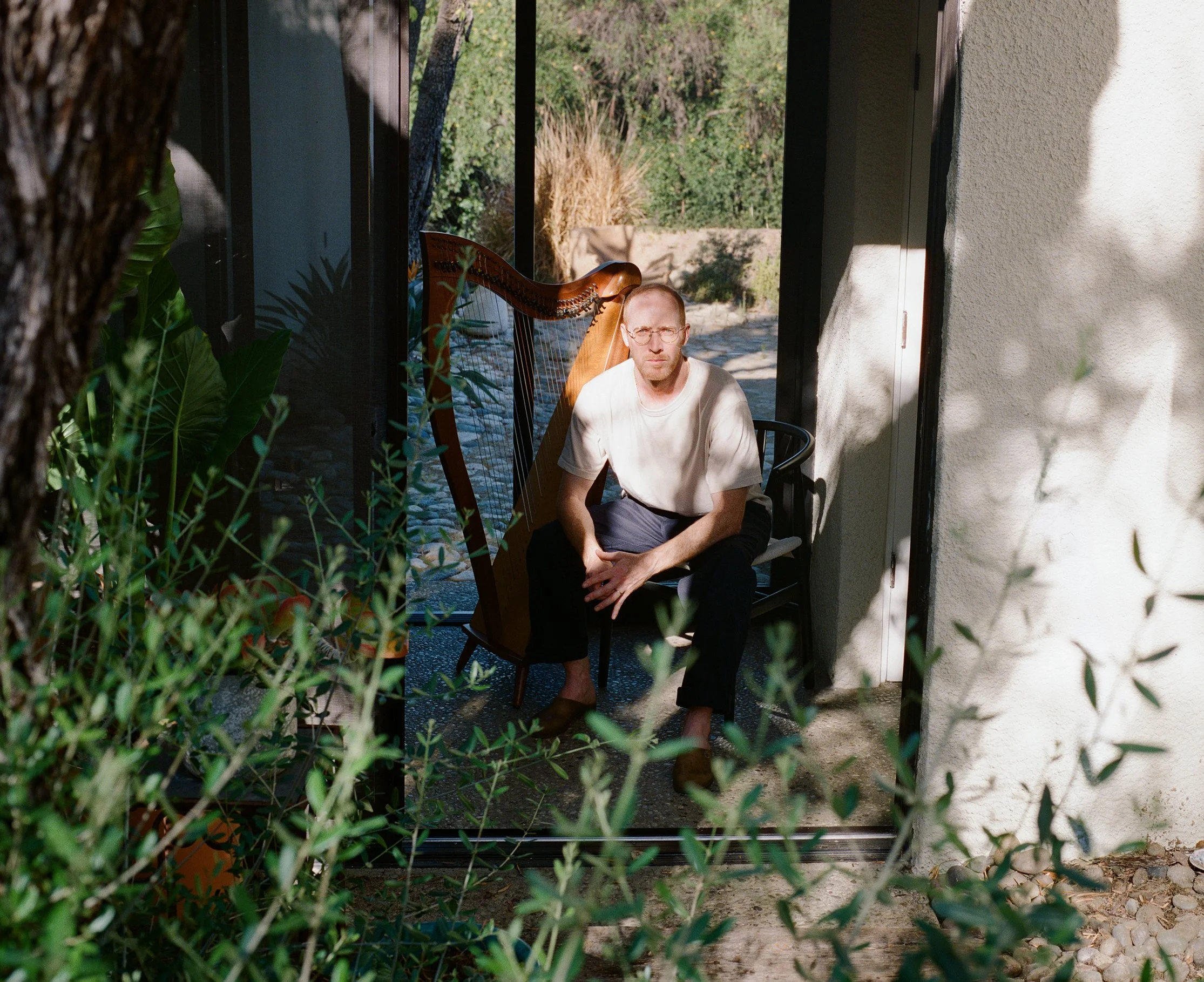
Active Child with his harp at his studio in Pasadena, Los Angeles.
Looking ahead ten or twenty years, what does a fulfilled life look like for you? And with everything you’ve learned and experienced so far, what do you want to be when you grow up?
A healthy heart and mind, a sturdy loving marriage, children that have stepped confidently into adulthood, and hopefully a planet and society that has been able to weather the onslaught of technological and environmental change. We've all got some very crucial years ahead of us.
As far as what I want to be when I grow up, I'm not sure I'll ever figure that one out. For now I'd be content being a reasonably successful music man and a good father.